LATEST ARTICLES

James sets NBA record in season opener

0

LeBron James made history on Tuesday, becoming the first NBA player to compete in 23 consecutive seasons when he took the floor for the Los Angeles Lakers.

The 40-year-old, returning after missing the team’s first 14 games due to sciatica, logged 11 points, 12 assists, and three rebounds in 30 minutes during the Lakers’ 140–126 victory over the Utah Jazz.

James — already the league’s all-time leading scorer — surpassed Vince Carter’s record of 22 straight seasons. His pair of made three-pointers also moved him past Reggie Miller into sixth place on the NBA’s career three-pointers list.

“It’s been a long time since he played, so for a first game back he looked incredible,” said teammate Luka Dončić. “He’ll keep finding his rhythm and he’s going to help us a lot.”

Dončić posted a game-high 37 points along with four steals, 10 assists, and five rebounds. Austin Reaves added 26 points for Los Angeles, while Utah’s Keyonte George and Lauri Markkanen scored 34 and 31 points, respectively.

The win lifts the Lakers to fourth in the Western Conference, with the Jazz sitting in 10th.

Yungblud pauses tour due to health concerns

0

Rock star Yungblud will step away from touring for the rest of the year on medical advice.

The 28-year-old Doncaster musician—who is set to bring his Idols World Tour to the UK next spring—had been scheduled to tour the US this month.

In a social media announcement, he explained that although it is “in my nature to run and run until I run myself to the ground,” doctors had urged him to take recent concerns about his voice and blood test results seriously.

Saying his “heart is broken,” he apologised to fans for cancelling shows in cities such as Philadelphia, Cleveland and Washington.

“I don’t want to do any lasting damage to myself—we’re on a journey that I want to last forever,” he told followers. “I know some of you will be frustrated. This is so hard for me, but I promise I’ll make it up to you. I never take your love, support or energy for granted. You mean everything to me. But I need this time.”

Yungblud—real name Dominic Harrison—had been touring his latest album Idols, released in June.

The record recently earned him a Grammy nomination for Best Rock Album, alongside a Best Rock Song nod for his track “Zombie.” He was also nominated for his performance of “Changes” at Black Sabbath’s Back To The Beginning farewell concert, held just weeks before Ozzy Osbourne’s death.

Known for hits such as “I Think I’m Okay,” featuring Machine Gun Kelly, and “Fleabag,” Yungblud is also the creator of BludFest, a festival designed to offer more affordable ticket prices than many UK events.

He has scored three UK Number 1 albums: Weird! (2020), Yungblud (2022) and Idols. Earlier this year, he received the Disruptor of the Year award at the Nordoff and Robbins Northern Music Awards in Liverpool.

Trump ends Canada trade talks over anti-tariff ad

0

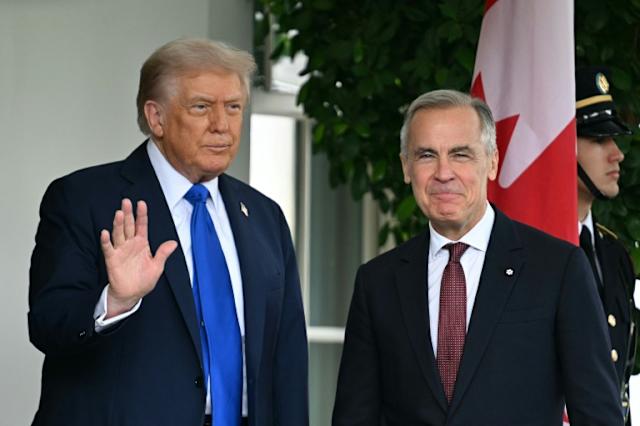
U.S. President Donald Trump has abruptly ended all trade negotiations with Canada after an Ontario government advertisement criticized his tariffs.

The minute-long TV spot quoted former President Ronald Reagan saying tariffs “hurt every American,” prompting Trump to label the ad “FAKE” and “egregious” on social media, declaring talks “HEREBY TERMINATED.”

The Ontario-funded campaign, part of a C$75 million effort, targeted U.S. audiences and highlighted the economic toll of Trump’s 35% tariffs on Canadian imports, including steel and automobiles. Ontario has been among the hardest-hit provinces.

The Ronald Reagan Foundation accused Ontario of misusing the late president’s words and said it was reviewing legal options. Trump cited that statement, alleging the ad aimed to influence a pending Supreme Court ruling on the legality of his tariffs.

Prime Minister Mark Carney had been seeking to ease trade tensions since taking office, while Ontario Premier Doug Ford—one of Trump’s fiercest critics—has led a public campaign against U.S. tariffs. Neither has yet commented on Trump’s decision.

This marks the second time Trump has halted talks with Canada, following a similar dispute earlier this year over a proposed digital services tax.

Norwich City Council Abandons Long-Delayed IT Project, Reaches Compensation Deal

Norwich City Council has officially scrapped a major IT upgrade after years of delays, technical setbacks, and mounting frustration. The project, designed to replace the council’s existing workflow management system, has now been abandoned following a mutual agreement with the software provider, Civica.

A compensation settlement has been reached between the council and Civica, though the exact figure remains undisclosed due to commercial confidentiality agreements. An internal message to councillors described the outcome as a “satisfactory agreement on project costs.”

Years of Delays and Technical Issues

The upgrade aimed to move the council’s operations — including housing, benefits, council tax, business rates, and revenues — to a cloud-based platform. The new system, known as W3, was intended to replace the current desktop-based Civica system, W2/Digital360. Initially scheduled for completion in 2023, the W3 rollout was postponed five times before finally being suspended and then terminated.

Internal progress reports revealed persistent technical difficulties and data migration problems. One report noted, “The system has had stability issues… whilst issues have been fixed, other issues appear.” These reports were obtained through a Freedom of Information request.

In April, the council confirmed that the project had been put on hold. Now, after months of review, both the council and Civica have agreed not to proceed further with W3.

No Immediate Impact on Services

The council has confirmed that its existing W2 system will continue to be used and is still fully supported by Civica. Staff will not experience any operational changes, and services are expected to continue without interruption.

Despite the project’s failure, Civica will maintain its broader relationship with the council, continuing to provide other IT services. Both parties emphasized their long-standing partnership, which dates back to 2002, in a joint statement.

Political Fallout

The project’s collapse has sparked political criticism, particularly from opposition councillors. Green Party councillor Alex Catt called the outcome “shocking, but no surprise,” and took aim at what he described as a “culture of secrecy” within the council.

He also linked the handling of the project to other recent controversies, including the financial troubles of Lion Homes — a council-owned housing developer — and overspending on temporary agency staff.

“The failure to disclose the compensation amount only adds to concerns about transparency and leadership,” Catt said.

The city council is currently under Labour control.

Conclusion

While the decision to abandon the W3 upgrade avoids further cost overruns and technical risk, it leaves the council continuing to rely on its older W2 system. The failed upgrade highlights the complexities and risks involved in large-scale digital transformation projects within local government.

For now, Norwich City Council will continue its long-standing partnership with Civica — but without the cloud-based ambitions that once promised a modernized IT future.

Keurig Dr Pepper to Acquire JDE Peet’s for $18.4 Billion, Plans Corporate Split

0

Keurig Dr Pepper (KDP) has announced its acquisition of Dutch coffee group JDE Peet’s in a landmark €15.7 billion ($18.4 billion) deal. The transaction will not only create the world’s largest dedicated coffee business but also result in a structural split of Keurig Dr Pepper into two independent, publicly listed companies: one for soft drinks and another for coffee.

Transaction Overview

Keurig Dr Pepper will pay €31.85 per share for JDE Peet’s, marking a 20% premium over its recent trading price. Once complete, the company will separate into:

  • Beverage Co., which will oversee the soft drinks business, including Dr Pepper, 7Up, and Snapple.
  • Global Coffee Co., a standalone coffee powerhouse encompassing brands such as Douwe Egberts, Peet’s Coffee, and Kenco.

“This is the right time for this transaction,” said Keurig Dr Pepper CEO Tim Cofer. He highlighted the company’s “operational and financial strength” and the “resilience” of its coffee portfolio as key motivators for the move.

Global Coffee Co.: A New Market Leader

With projected annual sales of around $16 billion, Global Coffee Co. is set to become the largest pure-play coffee company in the world, distributing in more than 100 countries.

  • Sudhanshu Priyadarshi, current CFO of Keurig Dr Pepper, will lead the new coffee entity.
  • Tim Cofer will continue to serve as CEO of Beverage Co.

The company said the split would occur “as soon as practicable,” once regulatory and shareholder approvals are finalized.

Market Reactions and Strategic Implications

Following the announcement:

  • JDE Peet’s shares surged 17.48% in Amsterdam — the highest one-day gain in the company’s history.
  • Keurig Dr Pepper shares fell 11.48%, reflecting initial investor caution over the deal’s size and complexity.

Analysts, however, believe the separation of coffee and beverage operations may unlock long-term value. “While the transaction is complex and involves a large acquisition, we see significant value in the separation of the Coffee & Beverage businesses,” said analysts at Citi.

Industry Context

The deal comes amid rising pressure across the global coffee industry. The U.S. remains the world’s largest importer of coffee, with American consumers drinking over 500 million cups daily. However, global coffee prices have nearly doubled in the past five years, driven by:

  • Climate change disrupting harvests in major producing countries
  • Geopolitical conflicts impacting trade routes and supply chains
  • Tariffs imposed under President Donald Trump, increasing import costs
  • Rising global demand for premium and specialty coffee

Keurig Dr Pepper, originally formed in 2018 through the merger of Keurig Green Mountain and Dr Pepper Snapple, now positions itself for the next phase of growth by separating its two largest segments to operate more independently and strategically.

Thailand Bans Tourists from Entering Cambodia Amid Escalating Border Dispute

0

Thailand has officially barred all tourists and travelers from entering Cambodia, tightening restrictions at multiple border checkpoints as a long-standing territorial dispute escalates.

The new measures, announced Monday by Thailand’s military, prohibit both individuals and vehicles from crossing into Cambodia from several Thai provinces. Additionally, foreign tourists are now banned from flying into Siem Reap from Thailand—a significant move given the city’s popularity as a gateway to Angkor Wat and other Cambodian attractions.

In a statement, the military said the travel curbs are intended to reflect and respond to “the current security situation” along the contentious border.

Tensions between the two Southeast Asian neighbors have reached their highest level in over a decade. Armed clashes near the border in May resulted in the death of a Cambodian soldier, triggering a sharp deterioration in bilateral relations.

In retaliation, Cambodia imposed a sweeping ban on Thai imports, including produce, electricity, internet services, and entertainment content like Thai television dramas and films.

While the travel restrictions are broadly enforced, Thai authorities confirmed that limited exemptions may be granted for humanitarian reasons—such as for students, medical emergencies, or other critical needs—subject to approval by border officials.

Thailand’s military also noted that the travel ban is aimed in part at combating cross-border scam syndicates based in Cambodia, which have been accused of operating illicit operations involving human trafficking and cyber fraud.

Prime Minister Paetongtarn Shinawatra reinforced the crackdown on Monday, announcing efforts to disrupt these scam networks, including plans to suspend certain internet services linked to Cambodian security agencies.

Thailand has taken similar action in the past against neighboring Myanmar, where scam compounds and illegal operations have also been a growing concern.

However, the latest fallout with Cambodia has also thrown Paetongtarn’s administration into political turmoil. A leaked phone call between the prime minister and former Cambodian leader Hun Sen stirred controversy when Paetongtarn was heard referring to him as “uncle” and dismissing a Thai military officer as merely trying to “look cool.”

Paetongtarn defended her remarks as part of a strategic negotiation approach, but critics accused her of diminishing the authority of Thailand’s powerful military. The incident led to the withdrawal of a key coalition partner from her Pheu Thai-led government, further destabilizing the political landscape.

Tensions between Thailand and Cambodia are rooted in complex historical grievances, tracing back to colonial-era boundary demarcations set during French rule in Indochina. Despite previous efforts at reconciliation, the dispute continues to inflame nationalist sentiment on both sides of the border.

Iranian Official Warns US Against Joining Israeli Strikes

0

Iran’s deputy foreign minister has cautioned that direct US involvement in Israeli airstrikes could escalate the conflict into “hell for the whole region.” Addressing the BBC, he stressed that the war is not America’s to join, warning that such action would brand President Trump as a leader who entered an unwanted war.

Saeed Khatibzadeh said U.S. participation would entangle it in a long, messy conflict, prolong violence and hamper diplomatic efforts. His remarks followed an incident where an Iranian missile hit near Israel’s Soroka Hospital, injuring dozens. Iran said its target was a nearby military installation.

At the same time, Israeli forces reportedly struck Iran’s nuclear facilities at Arak and Natanz.

Tehran refrained from confirming casualties, but emphasized its attacks were a form of “self-defence” under international law. Khatibzadeh claimed that diplomacy had been underway and faulted Israel for disrupting negotiations targeting renewed nuclear talks.

He implied that a diplomatic breakthrough was nearly reached prior to the June 13 Israeli strikes. He also dismissed U.S. accusations that Iran was on the verge of weaponizing uranium, calling them baseless.

Iranian and U.S. envoys have engaged in phone discussions aimed at de-escalation. However, Iran insists no negotiations will resume unless Israel halts its military strikes.

Iran’s nuclear enrichment, reaching purity levels approaching weapons grade, has increased scrutiny from the International Atomic Energy Agency. Yet Iranian officials insist its nuclear programme is peaceful.

In parallel, European foreign ministers are planning talks in Geneva on a diplomatic response, signaling growing international pressure for peaceful resolution of the conflict.

South Korea Suspends Loudspeaker Propaganda in Gesture Toward North

0

South Korea has halted its border loudspeaker broadcasts aimed at North Korea in a move officials describe as a step toward rebuilding mutual trust and reducing tensions on the Korean Peninsula.

The decision follows the recent election of President Lee Jae-myung, who campaigned on a platform of re-engaging with Pyongyang and fostering dialogue between the two Koreas. The broadcasts, which resumed in June 2024 after a six-year pause, were initially a response to North Korea’s use of balloons to send garbage across the border. These loudspeakers broadcast a mix of news, democratic values, and updates about life in South Korea.

North Korea has long viewed the broadcasts as a hostile act, even threatening to destroy the loudspeaker systems in the past.

According to the South Korean military, the suspension is intended to promote peace and restart constructive dialogue. However, human rights groups expressed concern over the move, arguing the broadcasts served as one of the few ways to reach ordinary North Koreans with outside information.

Critics, such as the Database Center for North Korean Human Rights, warned that the silence could aid North Korean efforts to maintain isolation and information control. Still, residents near the border have welcomed the decision, citing constant noise disruptions as a source of stress.

Officials in Ganghwa County expressed hope that North Korea would reciprocate by ending its own audio broadcasts, enabling life along the border to return to normal.

Military sources indicated that this is a suspension—not a permanent end—meaning broadcasts could resume if tensions escalate. The shift coincides with a noticeable drop in North Korea’s garbage balloon activities and comes nearly a year after the renewed psychological campaigns began.

Despite past aspirations for reunification, North Korea officially abandoned that goal last year, further complicating inter-Korean relations. The two nations technically remain at war, as no peace treaty was signed after the 1953 armistice that ended the Korean War.

Trump Tariff Ruling: What It Means for US Trade, Revenue, and Global Impact

0

Trade negotiations between the United States and China have hit a slowdown, according to US Treasury Secretary Scott Bessent, just weeks after both countries agreed to ease tariffs as part of a temporary truce.

Speaking to Fox News on Thursday, Bessent said the discussions had “stalled a bit” and emphasized that progress would likely require direct involvement from both President Donald Trump and Chinese President Xi Jinping. “Given the complexity and scale of the negotiations, it will take the two leaders stepping in,” he noted.

Earlier this month, the US and China reached an agreement in Switzerland to de-escalate their ongoing trade conflict. The deal included plans to eliminate certain tariffs and suspend others for 90 days, with a deadline set for May 14.

Under the agreement, the US reduced tariffs on Chinese imports from 145% to 30%, while China cut retaliatory duties on American goods from 125% to 10%. The Trump administration has long used tariffs as a tool to promote domestic manufacturing and leverage better trade deals, arguing that such measures protect American industries and generate tax revenue.

However, the trade strategy suffered a blow on Wednesday when the US Court of International Trade ruled that President Trump had overstepped his authority in imposing some tariffs. While the White House has appealed the decision—temporarily reinstating the duties—legal uncertainty clouds the future of Trump’s tariff agenda.

Bessent reiterated optimism about the talks continuing, adding that a presidential phone call with Xi could take place soon. “I’m confident China will re-engage once President Trump signals his priorities,” he said, highlighting the “very good relationship” between the two leaders.

Meanwhile, trade discussions with Japan are ongoing in Washington, with Bessent describing some potential deals as “very close” while acknowledging others remain “more complicated.”

Despite the temporary reprieve and ongoing dialogue, analysts suggest that recent legal setbacks could make other countries more hesitant to pursue trade agreements with the US.


2. Trump Tariff Ruling: What It Means for US Trade, Revenue, and Global Impact

By Ben Chu, BBC Verify
14 hours ago

President Donald Trump’s sweeping tariff policies are now under legal threat after a federal trade court ruled that he lacked the authority to impose certain duties under the 1977 International Emergency Economic Powers Act (IEEPA).

The court’s decision strikes down several recently introduced tariffs, including those aimed at curbing fentanyl smuggling from Canada, Mexico, and China, as well as the so-called “Liberation Day” tariffs—a universal 10% levy on all imports announced in April.

However, tariffs on specific sectors—such as steel, aluminum, and automotive parts—remain intact, having been enacted under separate legislation.

While a federal appeals court has granted a temporary stay, allowing the disputed tariffs to remain in place for now, the broader future of Trump’s trade strategy remains uncertain.

How Much Revenue Is at Stake?

According to US Customs data, tariffs imposed under IEEPA have already generated substantial revenue during the 2025 fiscal year (October 2024 to April 2025):

  • Fentanyl-related tariffs: $11.8 billion
  • Liberation Day tariffs (10% baseline): $1.2 billion
  • Steel and car part tariffs (not affected): $3.3 billion
  • Legacy tariffs on China (pre-IEEPA): $23.4 billion

Although some tariffs remain untouched by the court ruling, analysts at Goldman Sachs estimate that the invalidated measures would have generated nearly $200 billion annually.

Capital Economics projects the ruling could lower the average US external tariff from a projected 15% this year to 6.5%—still significantly higher than the 2.5% average in 2024 and the highest since 1970. A 15% average would have been the highest since the 1930s.

Implications for Trade Negotiations

The ruling may also undermine the US’s negotiating position. Trump had used the threat of tariffs—particularly those introduced in April—as leverage in trade talks. The European Union, for instance, entered intensified negotiations after Trump threatened a 50% tariff under IEEPA.

Now, countries like the EU, Japan, and Australia may wait for the court appeals process to conclude before agreeing to any concessions.

What It Means for Global Trade

Initial reactions from global stock markets suggest that investors see the ruling as positive for global trade. However, the uncertainty surrounding the White House’s next legal steps could create more instability.

Experts suggest Trump could seek alternative legal paths, such as invoking Section 301 of the Trade Act of 1974, which permits tariffs in response to unfair trade practices. He has also floated new sector-specific tariffs targeting industries like pharmaceuticals and semiconductors.

The World Trade Organization (WTO) has already downgraded its forecast for global trade in 2025, projecting a 0.2% decline instead of earlier expectations of 2.7% growth, largely due to Trump’s tariff policies.

If the court’s decision holds, it could offer a modest boost to global trade by reducing barriers. Still, the prevailing legal and policy uncertainty continues to cast a shadow.

“Trump’s trade war is not over—far from it,” concludes Grace Fan, an analyst with TS Lombard.

Zelensky Accuses Russia of Stalling Ceasefire with Unrealistic Demands

0

Ukrainian President Volodymyr Zelensky has accused Russia of attempting to delay meaningful peace negotiations, warning that Moscow is “trying to buy time” to prolong its military campaign. His remarks come just a day after former U.S. President Donald Trump announced that both Kyiv and Moscow were open to renewed truce talks.

Zelensky said Ukraine remained open to dialogue but stressed that continued “unrealistic conditions” from the Kremlin could not go unanswered. “If Russia continues to undermine progress, there must be tough consequences,” he posted on social media.

Trump had spoken separately with both Zelensky and Russian President Vladimir Putin on Monday, later stating that truce discussions would commence “immediately.” While Putin expressed willingness to explore a future peace framework, he stopped short of agreeing to a proposed 30-day ceasefire.

On Tuesday, Kremlin spokesperson Dmitry Peskov downplayed expectations of swift negotiations, emphasizing that there were “no deadlines” for talks.

In response to the ongoing stalemate, Zelensky intensified diplomatic efforts, reaching out to Western leaders, including Finland’s president, to rally continued international pressure on Russia.

Simultaneously, both the European Union and the United Kingdom unveiled fresh sanctions against Moscow. The EU moved to blacklist nearly 200 Russian oil tankers operating in what it calls a “shadow fleet” and hinted at stronger measures if Russia does not engage in serious talks. The UK followed suit, targeting 18 tankers, in addition to Russian military suppliers and financial institutions.

These sanctions followed a weekend of intense drone attacks on Ukraine—reportedly the largest since the war began in February 2022. Ukrainian officials claimed more than 1,000 Russian casualties from over 170 front-line clashes within a single day.

Despite international calls for peace, Trump signaled he would not support new sanctions, arguing they could derail fragile diplomatic progress.

Meanwhile, German Defence Minister Boris Pistorius condemned the continued Russian strikes. “Putin is clearly playing for time. Unfortunately, we have to say he is not really interested in peace,” he stated before a meeting of EU defense ministers.

Putin has thus far rejected joint U.S.-Ukrainian proposals for a ceasefire and declined Zelensky’s invitation for direct talks in Istanbul. Trump had offered to attend the proposed summit, contingent on Putin’s participation—an offer also ignored by Moscow.

Although temporary ceasefires have been proposed before—including one over Easter and another during Russia’s WWII victory celebrations—Kyiv has remained skeptical, citing repeated violations and calling for a comprehensive, sustained halt to hostilities.