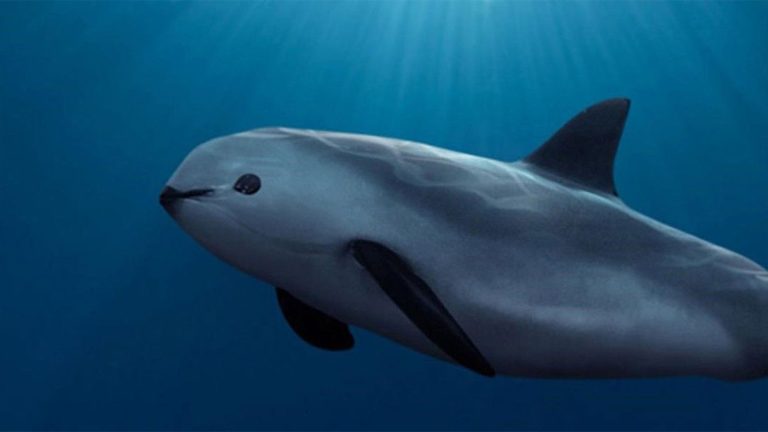
Vaquita: The world’s most endangered sea mammal may not be extinct.

0

Despite having only approximately 10 wild individuals, the world’s rarest sea mammal has a chance of survival, according to DNA analysis.

According to biologists, the vaquita porpoise is on the verge of extinction, yet DNA testing suggests that the population is still genetically viable.

The little silvery porpoise can only be seen in the Gulf of California in Mexico.

However, being trapped in giant weighted nets known as gillnets poses an existential threat.

“Our analysis reveals that the vaquita has a strong chance of escaping extinction if we can protect it by eliminating gillnets from its habitat,” study researcher Dr Jacqueline Robinson of the University of California, San Francisco, stated.”

Some people had given up hope of conserving the vaquita, believing that even if the species could be preserved from fishing pressures, in-breeding would wipe it out.

According to the study published in Science, the vaquita is not “genetically impaired” and should be able to recover from near-extinction provided its environment is adequately safeguarded.

The scientists looked at DNA from vaquitas caught between 1985 and 2017, which are closely linked to those alive today. They also created a computer model based on their DNA discoveries to anticipate how the population would change over the next 50 years.

The risks of inbreeding are lessened because the species has been rare for a long time and has naturally low levels of genetic variation, according to the researchers. They believe there are lessons to be learned for other endangered species, such as those that live on islands or have a small range.

However, given past tensions between conservationists and locals, as well as diplomatic friction over the Mexican government’s enforcement of fishing bans, saving the vaquita will be difficult.

Gillnet bans have been met with criticism from fishing communities. The illegal trade in the totoaba fish has also contributed to the extinction of the vaquita and other marine species caught in the nets.

Before being included on Mexico’s endangered species list, totoaba was a food source.

The swim bladder, which helps the fish stay afloat, is treasured in China for its rumoured (but untested) therapeutic powers.

Amber Heard claims Johnny Depp assaulted her while high

0

In court, Amber Heard alleged that her ex-husband, Johnny Depp, struck her repeatedly during drug and alcohol-fueled rages, turning the actor into an ugly creature.

Ms Heard, who testified during the fourth week of the trial, indicated that an aggressive pattern started in 2012.

Mr Depp has filed a lawsuit against Ms Heard for a story she wrote in which she described herself as a domestic abuse victim. He denied any misconduct throughout his presentation.

Ms Heard, 36, testified for several hours on Wednesday in Virginia, detailing her first interactions with Mr Depp in Puerto Rico while filming The Rum Diary. They “fell in love,” she said on the promotional tour for the film’s release in 2011.

Ms Heard’s early delights in their relationship were soon broken by Mr Depp’s negative statements, which he began expressing in 2012, the same year she claims he struck her for the first time.

In emotional testimony, Ms Heard said she laughed when Mr Depp, 58, revealed that a tattoo on his arm spelt “Wino”—a correction to a tattoo he had produced during a previous relationship with actress Winona Ryder.

Mr Depp has denied the interaction occurred, arguing in his evidence that the claim “never made any sense” to him. He allegedly sought to conceal his substance abuse, which she described as ranging from drinking alcoholic beverages to taking “a lot” of cocaine, according to her. He said that he had never hit Ms Heard and that she had a “need” for conflict and violence.

The defamation suit stems from a December 2018 opinion piece Ms Heard published for the Washington Post. She didn’t mention her ex-husband or any of the other suspects.

Mr Depp’s lawyers, on the other hand, contend that the piece was clearly about him, that it destroyed his career and tarnished his reputation “incalculably.” The trial will almost certainly continue for another month.

Is the Bank of England capable of halting spiralling inflation?

0

Fears of an “inflationary spiral,” the Prime Minister stated yesterday, had limited the amount of assistance the government could provide in the cost-of-living crisis.

This is a difficult notion to communicate to millions of people who have seen their energy bill direct debits more than double, while their take-home pay has decreased due to national insurance increases. Indeed, the more basic direction of causality is the opposite way around: lower energy price increases lead to lower inflation rates.

The logic isn’t brand new. In a letter outlining its approach to compensation for public sector workers in December, the Treasury made the same argument, saying that increases could “add to greater wage expectations across the country.”

The danger of an “inflationary spiral” is that these increases will speed up. As the Bank of England seeks to deal with inflation topping 8% or 9%, short-term interest rates are now likely to touch 2.5-to-three per cent, with the trend continuing tomorrow.

At the same time, analysts are beginning to predict that the same cost-of-living crisis will throw the economy into reverse. This isn’t a rocket science situation. Government support has only somewhat offset what may be a £40 billion increase in consumer energy costs, the equivalent of an 8p increase in the basic rate of tax.

At the same time as tax increases, this money is taken directly from household disposable income. This means that, in only one year, real consumer purchasing power will plummet to levels not seen since the 1940s.

After accounting for the extra Jubilee Bank holiday, some experts predict little growth or even a decline in the size of the economy for the current three-month period from April to June. Even as interest rates rise, the probability of a recession is increasing.

This is the “narrow route” that the Bank of England’s Governor claims his institution will have to travel in the coming months, as both growth and inflation are headed in the wrong direction at the same time. However, it is a road that may push British families even further away from their typical routine.

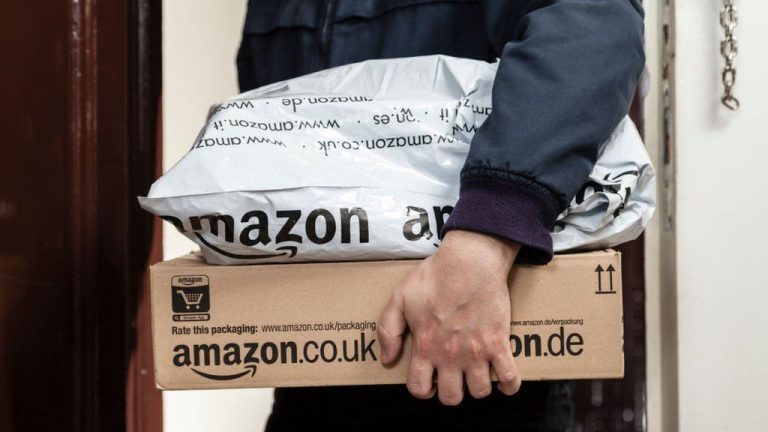
Amazon will cover the cost of abortions and other treatments for its employees in the US.

0

Amazon employees in the United States will be reimbursed for a variety of non-life-threatening medical treatments, including elective abortions.

According to an email sent to Amazon employees, the company will pay up to $4,000 (£3,201) in travel expenses each year for therapies that are not available locally.

Several more businesses have indicated plans to provide abortions to their employees. It comes as the technique is becoming increasingly restricted across the country.

The new Amazon perks are retroactively applicable as of January 1st.

The new benefits would apply to treatments that are not offered within a 100-mile (161-kilometre) radius of an employee’s residence and for which virtual choices are not available, according to the announcement, which was originally reported by Reuters.

The benefit expansion was confirmed by an Amazon spokesman, who added that it now includes bariatric care, cancer, congenital malformations diagnosed within 24 months of birth, mental health therapies, and in-patient substance misuse disorder therapy.

With 1.1 million full-time and part-time employees in the United States, Amazon is one of the largest private-sector employers in the country. 

The benefits will be available to all employees who are enrolled in one of the company’s two health plans, including those who work in offices or warehouses.

For urgent, life-threatening medical concerns, the corporation will pay up to $10,000 (£8,002).

While Amazon’s benefit extension isn’t expressly intended to facilitate abortion access, it comes at a time when numerous Republican state legislatures have approved laws restricting abortion access in their states.

The conservative-leaning Supreme Court will also make a decision next month on a lawsuit that might overturn Roe v. Wade, a 1973 court decision that legalised abortion in the United States.

A new survey indicated that 1,400 Texans travel out of state for abortions every month in Texas, which has one of the harshest abortion laws in the country, prohibiting the operation beyond six weeks of pregnancy.

Companies such as Yelp and Citigroup have lately announced that employees who travel to avoid local abortion laws will be reimbursed.

The decision was “in response to changes in reproductive healthcare laws in some states,” according to Citigroup.

Snapchat’s flying selfie drone

0

Snap, the firm most known for its photo-sharing app Snapchat, has now released a flying camera.

The startup describes Pixy, a small yellow drone, as a “free-flying buddy” that can assist people in capturing photos without using a selfie stick.

The device is available in France and the United States, where drone use is less restricted than in the United Kingdom.

It comes as several social media behemoths ramp up their hardware and augmented reality (AR) offerings.

The Pixy is self-contained, taking video as it flies and wirelessly transferring and saving it to the app.

The selfie drone lands in the palm of your hand at the end of the trip. 

Despite not receiving the same level of attention as other social media platforms such as Facebook or Twitter, Snapchat is nevertheless extremely popular.

According to Snapchat, there are 300 million daily active users worldwide. It also claims to have a reach of over 75% of people aged 13 to 34 in over 20 countries.

Snapchat is known for its augmented reality (AR) “lenses” that overlay art on selfies or distort the live image in various ways.

In 2016, Snap released Spectacles, camera-equipped eyewear, which advanced the immersive Augmented Reality experience.

Snapchat CEO Evan Spiegel predicted that Spectacles would one day be as common as smartphones, but the company lost nearly $40 million on the device in 2017. The main causes of the loss were “excess inventory reserves and inventory purchase commitment cancellation charges.”

Since then, the company has released an upgraded AR version of Spectacles, but they are not yet available for purchase.

The introduction of Pixy coincides with the opening of Meta’s first hardware store, which will feature items from Facebook and other major tech companies.

On May 9th, the Meta store in Burlingame, California will open, featuring Ray-Ban AR glasses, the Portal smart camera, Quest, and Beat Saber.

The decision is considered a sign of the company’s continued commitment to virtual reality and the metaverse.

Amazon sell-off ends dismal month for US shares

0

Investors turned their backs on once-favourite technology companies over concerns about the economy, sending US markets into a tailspin in April.

The Nasdaq index fell more than 4% on Friday due to a sell-off in Amazon shares after the company announced a drop in online sales.

The tech-heavy index had its worst month since the 2008 financial crisis, falling 13% in April.

However, the market downturn isn’t just affecting tech equities.

The S & P 500 as a whole experienced its biggest one-day drop since June 2020. It has dropped about 14% since the beginning of the year.

In April, the Dow Jones Industrial Average plummeted 5%, bringing its total loss to approximately 9% since January.

Markets, which are typically used to forecast future economic health, have been anxious as economic dangers have grown.

Higher oil prices and the war in Ukraine are driving inflation in the United States and elsewhere to multi-decade highs.

Both the war and the ongoing impact of the COVID epidemic have had an impact on key supply chains, particularly in China, where lockdowns are still being used to keep the virus from spreading.

Apple has already stated that disruption in China will have a significant impact on its business.

And Amazon, which benefited from the pandemic surge in-home delivery demand, has noticed that the effect is starting to dissipate.

Amazon’s stock plunged 14% on Friday after the company revealed lower online sales and its first quarterly loss since 2015. Etsy, a smaller online marketplace, saw its stock drop by more than 8%.

While consumer spending, which is the main driver of the US economy, has held up so far, there are growing concerns that rising prices may cause buyers to be more cautious, leading to a recession.

The US economy shrank by 0.4 per cent in the first three months of the year, according to data released earlier this week. The European Union reported only 0.2 per cent growth in the first quarter on Friday.

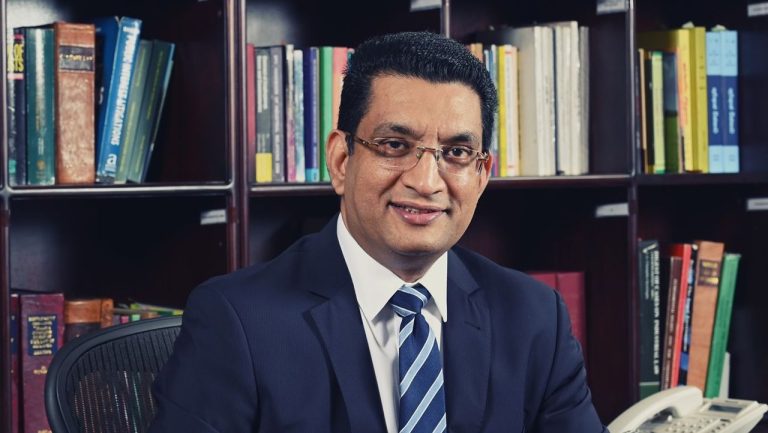
Sri Lanka’s finance minister, Ali Sabry, says the country has no choice but to raise the sales tax.

0

As the country faces its worst-ever economic crisis, Sri Lanka’s finance minister says he has no choice but to raise the country’s sales tax.

Ali Sabry admitted in an exclusive interview that the government made a mistake by practically halving the amount of value-added tax (VAT) to 8% in 2019.

Mr Sabry estimates that the country will require $4 billion (£3.2 billion) in imports of daily necessities during the next eight months.

His remarks come amid widespread opposition to the government’s economic policy.

Mr Sabry, who is leading talks with the IMF and other lenders, including India and China, one of the country’s main creditors, said that hiking taxes was only one of the painful decisions he would have to make as the rescue talks progressed.

The Sri Lankan government announced earlier this month that it would temporarily default on $35.5 billion (£27.3 billion) in international debt due to the pandemic and the crisis in Ukraine, which rendered payments to overseas creditors “difficult.”

As bailout talks in Washington began, it publicly requested emergency financial assistance from the IMF.

Mr Sabry is in charge of negotiations with the country’s various creditors on loan restructuring, which is a need for an IMF package.

India has offered a $1.5 billion credit line for petroleum imports, and Mr Sabry claims that India has agreed in principle to another $500 million credit line.

The coronavirus pandemic, rising energy prices, tax cuts, and rapidly dwindling foreign currency reserves have left Sri Lanka with insufficient money to pay for critical fuel, food, and medical imports.

As thousands of people took to the streets across Sri Lanka, hundreds of workers from state-run banks joined other bank trade unions in a protest march to the president’s office.

The amount of foreign currency arriving in Sri Lanka shows no signs of improving, as money sent to the country by Sri Lankans living and working abroad decreased to $318 million in March, roughly half of what it was last year.

Sainsbury’s to limit price rises as profits soar

0

Sainsbury’s profits have more than doubled, but the supermarket has warned that harsher days are ahead as consumers’ budgets are stretched.

It made an underlying profit of £730 million in the year to March, up from £357 million the previous year.

Customers are “monitoring every penny” as the cost of living rises, so profits are expected to be lower this year.

Despite rising expenses from suppliers, Sainsbury’s said it was attempting to keep price hikes to a minimum.

Unilever, the consumer products behemoth that owns brands like PG Tips and Marmite, announced on Thursday that its prices have risen dramatically in recent months.

Prices have risen by 8.3% as raw material costs have risen, and Unilever has warned that costs will rise much more in the second half of the year.

Sainsbury’s argued that while it had raised food prices, it had done so at a slower rate than its competitors.

Food prices are rising due to supply chain concerns, the Ukraine conflict, and rising raw material costs.

Sainsbury’s record earnings come as research shows that, as food costs continue to rise, the average food expenditure might jump by £271 this year.

According to Kantar, grocery prices were 5.9% higher in April than they were a year earlier, the largest increase since December 2011.

Sainsbury’s has anticipated reduced profits for the current year, following Tesco, the UK’s largest supermarket.

Due to rising cost constraints and the compression of household incomes, it stated there were “major uncertainties” weighing on the business ahead.

The retailer recorded a 7.6% increase in annual grocery sales from two years ago, owing in part to the COVID limits on dining out.

Non-food sales, on the other hand, have been severely impacted by supply chain issues, with general merchandise sales falling 4.6 per cent in 2019–20.

Unilever said that its increasing prices caused some customers, particularly in Europe and Latin America, to buy fewer of the company’s products.

However, Unilever’s revenues climbed by 7.3 per cent in the first quarter of this year, according to the company.

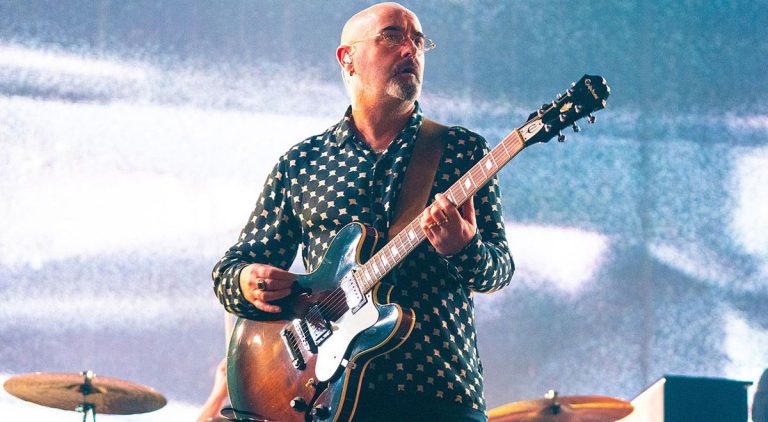
Oasis guitarist Paul Arthurs has been diagnosed with cancer

0

Former Oasis guitarist Paul Arthurs has withdrawn from forthcoming gigs after being diagnosed with tonsil cancer. The artist, better known by his stage name Bonehead, announced on Twitter that he would be “taking a break for a bit.” As a result, he will not be playing at any of the summer performances with Liam Gallagher.

Arthurs was a co-founder of Oasis and contributed to several of the band’s most well-known albums, including their debut, Definitely Maybe. He was in the band and played rhythm guitar and keyboards, as well as appearing on the songs What’s The Story (Morning Glory) and Be Here Now.

Arthurs quit Oasis in 1999 but had been collaborating with Gallagher on other projects in recent years. In the mid-2010s, he was a member of Noel Gallagher’s band Beady Eye, filling in for guitarist Gem Archer when he suffered a head injury. Arthurs has also been on Liam Gallagher’s solo albums and on subsequent tours with him.

He told his fans that he was going to start counselling soon. Tonsil cancer can be treated with surgery, radiation therapy, or chemotherapy. “Just to let you all know, I’m going to be taking a sabbatical for a bit,” he said in a statement posted to his social media account.

“I’ve been diagnosed with tonsil cancer, but the good news is that it’s curable, and I’ll start treatment as soon as possible.” I’ll keep you up to date on the situation.

“I’m very disappointed that I won’t be seeing Liam and the band this summer.” Have a wonderful summer, and if you’re attending any shows, have fun! I’ll contact you as soon as possible xxx”

“My heartfelt condolences to Bonehead and his family, and best wishes for a rapid recovery.” “We’re all thinking about you,” Gallagher tweeted to Arthurs.

“Get better soon, Bone,” commented Andy Bell, a former member of Oasis.

Shanghai: Green fences baffle locked down residents

0

Fences have been built to restrict the movement of the population amid Shanghai’s current COVID epidemic.

Green barricades have sprouted outside buildings without warning, preventing people from exiting. A green fence appeared inside his locked-up enclosure three days ago, according to one inhabitant.

Shanghai’s 25 million residents have been confined to their homes for weeks as officials attempt to curb the city’s greatest COVID spike to date.

It was unclear why officials started erecting the walls right away. One local authority, according to an online notification dated April 23, was implementing a “strict quarantine” in several locations.

The man, who did not want to be recognised, claimed his compound’s main gate was chained up three weeks ago after one of his neighbours tested positive for the virus. He claimed workers built a new barrier without warning.

While some city authorities were busy erecting barriers, others were attempting to suppress a popular film depicting the city’s lockdown’s impact on its citizens.

Unverified audio samples of the local populace criticising poor food supplies and complaining about medical problems are included in the six-minute montage.

Although public criticism of official policies is uncommon in China, some Shanghai residents have expressed their dissatisfaction on social media platforms in recent weeks.

Some residents in Shanghai’s enclaves say they’ve been unable to obtain food and have been forced to wait for government deliveries of vegetables, meat, and eggs.

Other recent city initiatives include the installation of electronic door alarms to prevent infected individuals from fleeing and the forcible removal of people to allow their homes to be cleansed.

In addition, all infected patients and their close contacts have been required to be transported to a government-run centralised quarantine.

On Sunday, Shanghai recorded 39 COVID deaths, a new high for the city, as well as more than 21,000 new infections.

China, unlike many other countries, is pursuing a zero-Covid approach to totally eliminate the virus from the country.

While early lockdowns were successful in keeping infection levels low, later lockdowns have struggled to contain more transmissible modern forms of the virus.

……….