Climate change: Wind and solar power approach a watershed moment as demand surges

0

According to a new study, wind and solar-generated 10% of global electricity for the first time in 2021.

Fifty countries, according to Ember, a climate and energy think tank, get more than a tenth of their energy from wind and solar sources. Energy demand surged as the world’s economies recovered from the COVID-19 pandemic in 2021.

According to the study, the increase in demand for electricity last year was equivalent to adding a new India to the global system.

In 2021, solar, wind, and other clean energy sources produced 38 per cent of the world’s electricity. For the first time, wind turbines and solar panels combined to create 10% of total energy.

The Netherlands, Australia, and Vietnam were among the countries that made the most rapid transitions to wind and solar power. All three have moved a tenth of their electricity demand from fossil fuels to renewables in the last two years.

Coal-fired power surged at the fastest rate since 1985, accounting for a considerable portion of the increased demand for electricity in 2021.

Much of the growth in coal use occurred in Asian countries such as China and India. However, the increase in coal was not matched by an increase in gas use of only 1% globally, showing that rising gas prices have made coal a more viable source of energy.

Despite coal’s recovery in 2021, major economies such as the United States, the United Kingdom, Germany, and Canada are planning to switch to 100% coal-fired power grids within the next 15 years, according to experts.

Concerns about limiting the global temperature rise to below 1.5 degrees Celsius this century have prompted this shift.

Wind and solar power must develop at a rate of roughly 20% every year until 2030, according to scientists.

The conflict in Ukraine may also give a boost to alternative energy sources that aren’t reliant on Russian oil and gas shipments.

How is China’s zero-Covid strategy evolving?

0

China’s zero-COVID policy has been one of the most stringent in the world in combating the pandemic.

However, a recent spike in infections has forced it to rethink its approach to the pandemic.

The Omicron strain has been substantially responsible for the recent increase in daily cases, which has been extensively dispersed across the country.

Tens of millions of people in China, including the whole province of Jilin in the north and the tech-hub city of Shenzhen in the south, have been ordered to stay indoors.

After battling the new wave for nearly a month, Shanghai, China’s largest city, has become the latest city to join the list.

Across the country, makeshift hospitals and quarantine centres have been established.

Infection rates, however, remain modest when compared to the United States and Europe.

China’s tight zero-COVID stance is proving increasingly difficult to maintain as more illnesses are discovered around the country.

Some requirements have been modified as China’s healthcare system becomes increasingly stressed: those with minor symptoms no longer need to go to designated hospitals, but they must still be isolated at centralised facilities.

It has reported a little over 4,600 deaths since the end of 2019. (according to Our World in Data). More than 970,000 people have died in the United States, and just over 160,000 in the United Kingdom.

In mainland China, there are roughly three deaths per million people, compared to 2,922 in the United States and 2,402 in the United Kingdom.

Throughout the pandemic, the number of reported infections in China has been extremely low.

Almost 88 per cent of the population has now had all of their vaccinations. Despite this, China is nearly alone in implementing rigorous zero-COVID rules.

As vaccination rates increased, Australia, New Zealand, and Singapore reduced their tight rules in the second half of 2021. Cases increased in those three nations, owing to the spread of the Delta and Omicron coronavirus types, but they have remained low in contrast to countries across Europe and the United States.

Schools White Paper includes higher maths and English targets

0

New proposals for schools in England include higher English and maths standards as well as the implementation of a national behaviour survey.

Ministers hope that by 2030, 90% of primary school students will have met the required reading, writing, and math levels. In 2019, the figure was 65 per cent.

The government wants the mean average of all grades at GCSE to go from 4.5 to 5, indicating a “strong pass.”

According to research for the government by the Education Policy Institute (EPI) and Renaissance, the amount of learning lost due to the pandemic varies greatly across England, and the poorest kids have fallen worse behind than the better off.

Pupils with special educational needs or disabilities (SEND) are included in the goal.

A national behaviour survey of parents, children, and teachers is proposed in the government’s White Paper.

In a government evaluation last year, parents and teachers were asked for their opinions on behaviour.

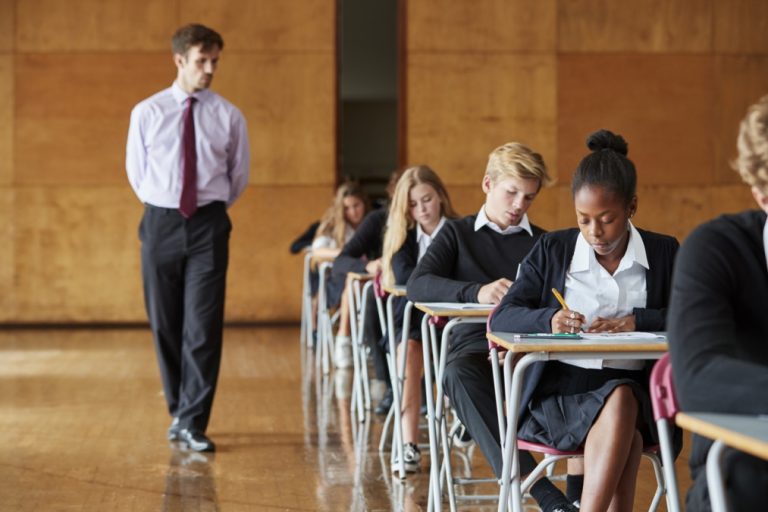
In an effort to boost attendance following the epidemic, the government wants to make it a legal obligation for local governments to re-engage students who have missed the majority of their classes.

Nadhim Zahawi, the Education Secretary, said that any student falling behind in math or English will be helped.

Following two years of disruption caused by lockdowns and classroom closures, he stated “approximately 200,000” youngsters were currently absent from school due to the coronavirus. Using the National Tutoring Programme, the government would deliver on its goal of providing six million tutoring courses by 2024 to help students catch up.

According to the government’s plans, by 2030, all English schools will be advised that they must be part of a group of academy schools or be in the process of joining a multi-academy trust.

Academies are funded directly by the government and are operated independently of local governments.

At the moment, 52% of students attend academies.

When there are no other options, the government will allow local governments to form a multi-academy trust that includes schools.

Helping every child achieve solid reading, writing, and math skills should not be an “add-on,” according to Labour.

World Match Play: Ireland’s Seamus Power to face England’s Tyrrell Hatton in last 16

0

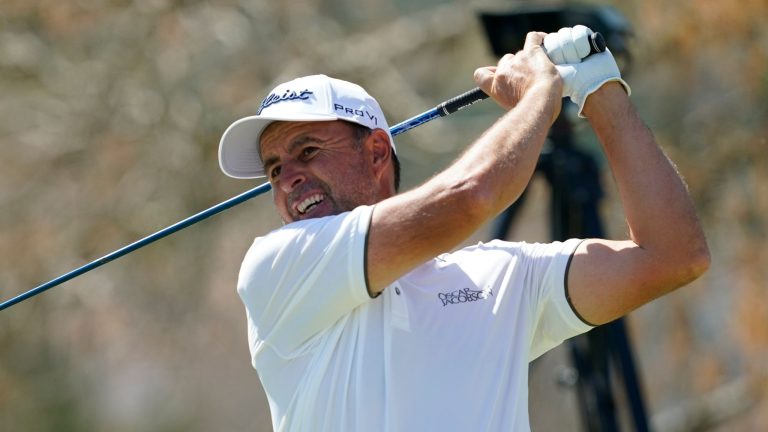
Seamus Power of Ireland, Tyrrell Hatton and Richard Bland of England have qualified for the WGC Dell Technologies Match Play knockout stages.

Despite falling to Patrick Reed in group one, world number one, Jon Rahm, advanced to the last 16 and will meet Brooks Koepka.

Billy Horschel, the defending champion, rallied from two holes down with two holes to play to equal Thomas Pieters and advance.

In the knockout round on Saturday, the 16 winners of each four-man group will compete. Seamus Power of Ireland, Tyrrell Hatton and Richard Bland of England have qualified for the WGC Dell Technologies Match Play knockout stages.

Power, who will face Hatton in the last 16, was not even in the top 450 players in the world a year ago.

The 35-year-old, who finished 42nd in the Match Play in Austin, won the Barbasol Championship in July 2021 and is now in line for his first Master’s invitation.

He was defeated 2–1 by Keith Mitchell, but Patrick Cantlay defeated Sungjae Im, putting Power in first place in group four.

“My golf game has improved. That’s what’s different now. It was said by Power. On the golf course, things don’t appear to be as difficult.

In a group that included South Africa’s Christiaan Bezuidenhout, South Korea’s Kim Si-woo, and America’s world number 17 Daniel Berger, Hatton won all three of his games.

Bland, who is 49 years old, is also scheduled to make his Masters’s debut. After defeating 48-year-old Lee Westwood 2 & 1 in group nine, he will face former world number one Dustin Johnson in the last 16.

Bland, who won the British Masters last year on his 478th start on the DP World Tour, said, “I need the afternoon off.” Lee and I joked that whoever finishes first will most likely win.

Lee is someone I’ve known for a long time. He’s a sporting great, so being able to go head-to-head with him and beat him was quite special. 

Rachel Zegler: West Side Story actress gets Oscars invitation after outcry

0

Rachel Zegler, who starred in West Side Story, will attend the Oscars after all, despite an outrage when she disclosed she had not been invited.

In Steven Spielberg’s latest rendition of the classic musical, Maria, Zegler is up for seven Academy Awards on Sunday.

She claimed she would watch the ceremony on TV in “sweatpants and my boyfriend’s flannel” earlier this week.

However, she has since been added to the final list of prize presenters.

The 20-year-old is currently filming in the United Kingdom for Disney’s new live-action Snow White film.

“It’s not lost on me that shooting a film of the magnitude of Snow White during COVID is not easy, and any timetable change is no small sacrifice,” Zegler remarked.

She expressed gratitude to the Academy of Motion Picture Arts and Sciences, which organises the Oscars, as well as to Will Packer, the producer of this year’s ceremony.

In response to a social media user’s question about what she planned to wear, the actress initially said she had not been invited to the glitzy Hollywood event.

Russ Tamblyn, who portrayed the Riff in the 1961 picture, was among those who urged the Academy to reconsider, saying it was “your responsibility to find Rachel a seat at the Oscars.”

Although Ziegler isn’t nominated, her co-star Ariana DeBose, who plays Anita, is a favourite to win best supporting actress, and the film is also up for the best picture.

Tennis legends Serena Williams and Venus Williams, whose tale is depicted in another best picture nomination, King Richard, are among the most recent additions to the award presentation lineup.

Jake Gyllenhaal, Jason Momoa, Josh Brolin, and Jacob Elordi from Euphoria will join them.

Sir Anthony Hopkins, Samuel L Jackson, Lily James, Daniel Kaluuya, Zoe Kravitz, Mila Kunis, Lady Gaga, Rami Malek, Lupita Nyong’o, Elliot Page, Uma Thurman, and John Travolta are among the previously announced presenters.

Inflation hits new 30-year high ahead of Sunak statement

0

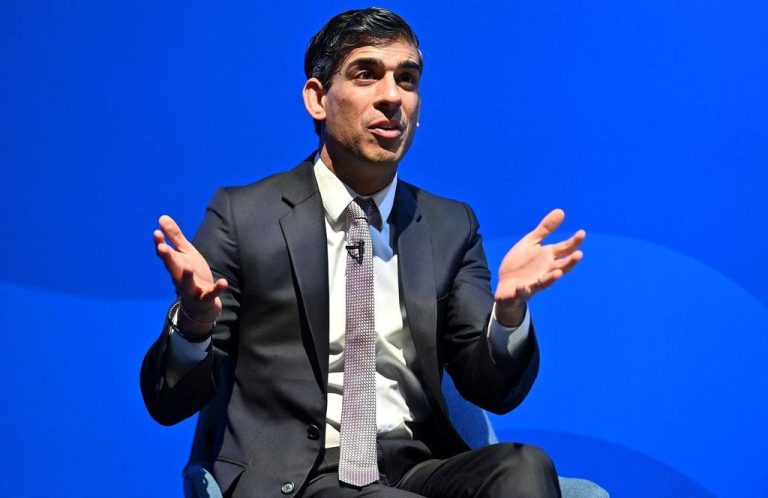
Last month, the cost of living continued to rise, highlighting the problem facing the chancellor ahead of his spring budget statement on Wednesday.

Fuel, electricity, and food costs skyrocketed, causing prices to rise by 6.2 per cent in the year to February, the fastest rate in 30 years.

As household budgets are stretched, Chancellor Rishi Sunak is under increasing pressure to provide greater assistance.

Prices are rising faster than salaries, according to the Bank of England, which predicts double-digit growth this year.

When Mr Sunak reveals his spending plans at midday today, there is speculation that he will reduce fuel duty, increase benefits, and raise the national insurance threshold.

Inflation refers to the rate at which prices rise. The inflation rate is 5% if the price of a bottle of milk increases by 5p.

Prices have been rising at their fastest rate since the 1990s since December last year. When the energy price ceiling is lifted in April, inflation is projected to skyrocket.

In England, Scotland, and Wales, this will increase the average home fuel cost by £693 per year, while a projected increase in national insurance will also put pressure on household budgets.

According to the Office for National Statistics (ONS), gas prices were roughly a third higher in February than a year earlier, and electricity costs were nearly a fifth higher.

Prices for a wide range of products and services, from food to toys and games, have risen, according to Grant Fitzner, chief economist at the Office for National Statistics (ONS).

Firms have faced greater energy, shipping, and payroll costs as pandemic restrictions have been lifted around the world, which they have passed on to consumers.

Oil and other commodity prices have risen as a result of Russia’s invasion of Ukraine.

Andrew Selley is the CEO of Bidfood, one of the major food wholesalers in the UK, which serves over 45,000 caterers and food businesses.

Mr Selley added that the price of diesel had increased by 40% over the previous year and that “if I look at our energy pricing, it’s up by 250% over last year, and those two items together make up over 10% of our entire costs.”

Biden: Russia is ‘investigating’ US cyber-attacks

0

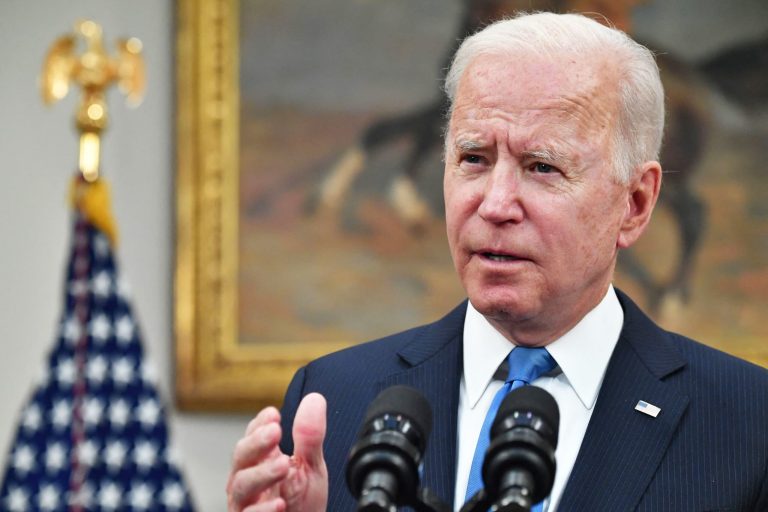
On Monday, Vice President Joe Biden stated that intelligence indicated a growing Russian cyber threat to the United States.

He claimed that Russia was “exploring” a cyber strike but that the US would use “every weapon” to prevent and retaliate.

Mr. Biden suggested that Moscow would retaliate for sanctions imposed on it following Russia’s invasion of Ukraine.

According to Russia’s foreign ministry, bilateral ties between Moscow and the United States are “on the edge of collapse.”

Mr. Biden has previously warned of a possible Russian cyberattack, stating on February 24 that the US was ready to retaliate. He suggested that the potential for “malicious cyber activities” could be motivated by the “extraordinary economic burdens” imposed by Western sanctions.

Since tensions between Russia and Ukraine began to rise, the cyber security industry has been bracing for a large-scale cyber-attack from Russia.

Cyber authorities in the United States, the United Kingdom, and elsewhere have issued warnings about not only assaults on Ukraine but also so-called “spillover” attacks, in which other nations are targeted or a hacker mistakenly travels outside of the conflict zone.

The NotPetya wiper attack, which the US and EU have openly blamed on Russian military hackers, is the example authorities keep using.

In 2017, malicious malware spread uncontrollably, disrupting thousands of organisations around the world and causing an estimated $10 billion (£7.6 billion) in losses.

Although President Biden did not state it officially, the concern appears to be about an attack on a crucial piece of US infrastructure.

Last year, we witnessed the chaos and anguish created on the east coast when criminal hackers shut down an oil pipeline.

In the worst-case scenario, a catastrophic cyber-attack on the US or another NATO member might activate Article 5, the collective defence clause.

On the one hand, President Biden’s warning is unsurprising and simply a continuation of his government’s “shields up” programme, which began months ago.

Western intelligence, on the other hand, has been extraordinarily successful in predicting the Kremlin’s next move, so his statements could have more weight in the context of the increasing war.

War in Ukraine: Russia has retaliated against anti-war musicians

0

A few days after Russia’s invasion of Ukraine, the Russian Media Group (RMG), one of Russia’s major media corporations, issued a statement explaining why specific musicians would no longer be played on its popular radio stations or music TV channels.

The harsh words these singers made about Russia in the light of the tough situation between Russia and Ukraine were the grounds for this decision, the statement stated.

It added that the company’s first goal was respect for its listeners and that the singers’ “arrogant and disdainful attitude toward Russian fans” left it with no alternative but to cancel its relationship with them.

Several Ukrainian musicians were on the list, as were three Russian acts, including the famed rock band Aquarium, whose lead singer, Boris Grebenshchikov, had termed the war “madness” in an Instagram post. Political pressure is nothing new to him.

Ukrainian musician Ivan Dorn posted a video on Instagram on the first day of the war, urging Russians to “stop this tragedy” and “not participate in this deadly war.”

Days later, he was added to the Russian Media Group’s list of banned performers, and his name appeared on yet another “black list” released to the Russian media, demanding that some musicians be barred from performing due to their anti-war sentiments. 

It’s unclear who made the “black list” or where it came from, and there’s no way to verify its validity, but music industry insiders claim such records are frequent.

Russian rapper Oxxxymiron, whose name has been disseminated in Russian media as part of a “black list,” has cancelled his upcoming tour in Russia and instead organised charity performances overseas dubbed “Russians Against War” to collect money for Ukrainian refugees.

At a performance in Istanbul, he raised nearly $30,000 (£22,760), and he’ll be in London later this week.

Oxxxymiron claimed that he couldn’t “entertain people while Russian rockets fall on Ukraine, while citizens of Kyiv are forced to hide in their basements and the subway, and while people are dying” on announcing the cancellation of his Russian tour.

In a self-mocking metaverse ‘joke,’ Heineken unveils a virtual beverage.

0

A brewer has constructed a virtual beer to demonstrate the lengths to which companies would go to have a piece of the next big thing: the metaverse.

Heineken staged a simulated launch to promote the “product,” which one participant characterised as “surreal.”

Although the metaverse does not yet exist, many individuals anticipate that in the future, people will spend their time in interconnected virtual worlds accessed by a VR headset.

According to the company, it was an ironic joke that pokes fun at us and other brands.”

The simulated launch, which was attended by actual media, took place in a virtual brewery in Decentraland, a user-owned virtual environment.

The beer was produced with “binary-coded hops grown by NPC (non-player character) farmers,” according to the description.

“We realise that the metaverse brings people together in a light-hearted and immersive way, but it’s just not the best location to taste a new beer,” Bram Westenbrink, the company’s global head of brand, said.

The narrator states, “Our new virtual beer is an ironic joke.” It’s a self-aware notion that mocks us and a plethora of other companies that are playing in the metaverse with real-world objects.”

When Facebook relaunched as Meta in October of last year, Mark Zuckerberg described his vision of interconnected virtual worlds where people could work and play. The metaverse gained traction.

Brands are increasingly investing in virtual worlds and merchandise.

Nike paid an unknown sum in December for virtual shoe developer RTFKT, claiming it would help them “assist athletes and creators at the nexus of sport, creativity, gaming, and culture.”

JP Morgan Chase, which recently constructed a virtual nightclub in Decentraland, predicted that the metaverse would become a trillion-dollar industry.

The experience was “surreal,” according to Tom Fiske, editor of Immersive Wire, who was there for the Heineken launch.

I began by speaking with the bouncer, who asked for my age. Then I went into the corridor, “he explained. “There was a variety of interactive objects, including a sampling card,” says the author.

The massive new SLS Moon rocket from Nasa makes its debut.

0

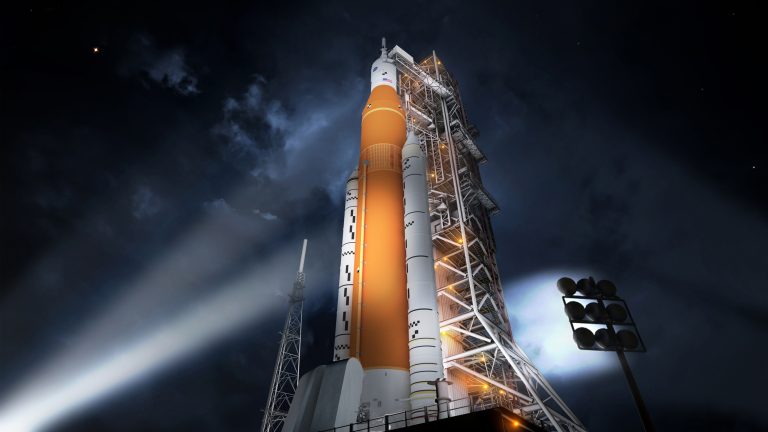
The United States space agency has unveiled its new massive moon rocket for the first time.

The vehicle, dubbed the Space Launch System (SLS), was transported to the Kennedy Space Center in Florida for a dummy countdown.

If everything goes well, the rocket will be declared ready for a mission to orbit the Moon with an uncrewed test capsule.

This could occur within the next few months. At some point in the second half of this decade, astronauts are expected to board SLS rockets and return to the Moon’s surface.

SLS is a behemoth. It was meant to be more powerful than the Apollo Saturn vehicles of the late 1960s and early 1970s, standing just under 100 metres tall.

It will have enough thrust to carry astronauts far beyond Earth, as well as enough equipment and cargo for such crews to stay away for long periods of time.

The Crawler Transporter travels slowly, with a cruising speed of slightly over 1 km/h (under 1 mph). Therefore, it took the rocket 11 hours to reach the launch pad, which was 5 kilometres away from the VAB. Engineers checked everything was in working order by stopping and starting the tractor along the way.

SLS will now prepare for a “wet dress rehearsal,” which is expected to take place on April 3rd.

The rocket will then be fueled with propellants and sent through a rehearsal countdown until it reaches 9.4 seconds before lift-off. The “scrub” point occurs immediately before the four large shuttle-era engines under the rocket are generally lit.

Nasa will be able to establish a flight date if all goes according to plan and the engineers are satisfied. While Nasa is working on the SLS, Elon Musk, an American rocket entrepreneur, is working on a much larger vehicle at his Texas R&D center.

According to a recent study by the Office of Inspector General, which audits Nasa programmes, the first four SLS flights will each cost more than $4 billion to complete, a price that has been criticised as unsustainable.