In the midst of the cancellation of culture, Chappelle smashes it. The Netflix transgender controversy.

0

Dave Chappelle, the American comedian whose recent Netflix special generated a transgender reaction, has retaliated against those who want to ‘cancel’ him.

In response to complaints that his comedy show was transphobic, Chappelle stated on Instagram that he was willing to meet members of the transgender community.

He then asked viewers to vote on whether he should be “cancelled.”

It comes after a tiny demonstration outside Netflix’s Los Angeles offices last week. Chappelle’s Netflix show The Closer, in which he declares that gender is a reality and that LGBT people are very sensitive, has enraged critics.

Netflix’s Chief Content Officer, Ted Sarandos, apologised for how he handled internal employee dissatisfaction, saying, “I screwed up.”

According to CNN, Chappelle’s video was shot at his performance in Louisville, Kentucky, on Sunday and shared on his Instagram account on Monday. It was his first public response to criticism since the premiere of his show on October 5. He was on the show with Joe Rogan, a prominent podcaster.

“I was asked to speak to transgender employees at Netflix, and I declined,” Chappelle, 48, told the crowd.

“That isn’t the case. If they had invited me, I would have accepted. Even if I’m not really sure what we’re discussing. You said that you wish to work in a secure environment at Netflix. “ Well, it appears that I’m the only one who can no longer go to work.”

“I am more than willing to give the transgender community a platform,” he added. However, you will not summon me. “I’m not going to comply with anyone’s requests.”

Last week, Netflix claimed a global membership total of 213.5 million, a new high. Chappelle also claimed that his latest documentary, Untitled, was denied screenings at film festivals as a result of the special.

“Today, no film company, studio, or festival will touch my film,” he claimed, urging viewers to see his new film and determine whether or not he should be “cancelled or not.”

BepiColombo: The first photograph from Europe’s expedition to Mercury has arrived

0

Mercury, the Solar System’s innermost planet, has been photographed for the first time by Europe’s BepiColombo spacecraft.

The photograph was taken just after the probe zipped over the small world at a speed of 200 kilometres per hour (125 miles).

A total of five further flybys are planned, with each one relying on Mercury’s gravitational pull to help control the spacecraft’s speed. Bepi’s goal is to move slowly enough that it can eventually settle into a stable orbit around the planet. By the end of 2025, this should be accomplished.

A low-resolution monitoring camera on the probe’s side took the mission’s first image of Mercury. Bepi’s high-resolution science cameras are not yet ready for deployment. These are stashed away inside the spacecraft stack, as it’s known.

Bepi is a spacecraft that is essentially two spacecraft in one.

The European Space Agency (ESA) built one half, while the Japanese space agency developed the other (Jaxa). The way these two components were bundled for the trip to Mercury obstructs the main cameras’ apertures.

This means the mission’s first photographs of Mercury were captured by a couple of “selfie” cameras installed on the outside of the craft, which were nonetheless good enough to pick out recognisable features on the planet’s surface.

Even at this early stage, data was being collected during the first flyby. It was an opportunity for the scientists behind the Mercury Imaging X-ray Spectrometer, or MIXS, in the United Kingdom to gain a better understanding of their instrument’s performance.

The detectors at MIXS pick up a background noise of energetic particles known as cosmic rays. When the expedition reaches Mercury’s orbit, the European and Japanese components will split off and play different roles.

The Mercury Planetary Orbiter (MPO) is a spacecraft developed by Europe that will map Mercury’s landscape, generate height profiles, collect data on the planet’s surface structure and composition, and sense its interior.

The antiviral drug Covid can cut the chance of hospitalisation in half

0

An experimental treatment for severe epilepsy Interim clinical study findings suggest that Covid reduces the risk of hospitalisation or death by nearly half.

The molnupiravir tablet was given twice a day to patients who had recently been diagnosed with HIV.

Merck, a pharmaceutical company based in the United States, said the trial’s results were so promising that outside observers sought to end it early.

In the following two weeks, it plans to file for emergency use authorization for the medicine in the United States.

According to Dr. Anthony Fauci, chief medical adviser to US President Joe Biden, the findings were “extremely good news,” but he advised caution until the data was reviewed by the US Food and Drug Administration (FDA).

Molnupiravir would be the first oral antiviral drug for Covid-19 if it is approved by regulators.

The pill, which was originally created to treat influenza, works by inserting faults into the virus’s genetic coding, stopping it from propagating throughout the body.

Most Covid vaccines function by targeting an enzyme that the virus uses to replicate itself, rather than the spike protein on the exterior of the virus.

That should make it similarly powerful against new strains of the virus as it evolves in the future, according to Merck, which is known in the UK as MSD.

According to the results of the trials, molnupiravir must be given soon after symptoms appear in order to have an effect. After poor findings, an earlier study on individuals who had already been hospitalised with severe COVID was terminated.

Merck is the first business to announce the findings of a pill trial to treat Covid, but other companies are developing similar medicines. Pfizer, a US competitor, has recently begun late-stage studies of two antiviral pills, while Roche, a Swiss business, is working on a similar treatment.

“A safe, inexpensive, and effective oral antiviral would be a tremendous advance in the fight against Covid,” said Prof. Peter Horby, an infectious disease expert at the University of Oxford.

“In the lab, molnupiravir seemed good, but the real test was whether it helped people.” Many medications fail at this stage, therefore these preliminary findings are highly ppromising”.

St Helens defeated Leeds Rhinos 36-8 in the Super League, and will face Catalans Dragons in the Grand Final

0

After easily passing Leeds Rhinos, St Helens secured a Super League Grand Final date with Catalans Dragons.

The incumbent champions had an early lead, which James Roby increased before Richie Myler put Leeds on the board just before halftime. The Saints’ lead was extended to 24-4 after tries from Mark Percival and Kevin Naiqama. Leeds had a chance thanks to Luke Briscoe, but Percival and Grace both crossed again to ensure Saints’ place in their third consecutive Grand Final on October 9th.

St Helens will meet the League Leaders’ Shield winners a week on Saturday at Old Trafford, where they defeated Wigan in last season’s climax. Winners of the Challenge Cup Saints’ unrelenting pursuit of silverware showed no signs of slowing down in this match, as Kristian Woolf’s side displayed their superior steel to keep their ‘three-peat’ ambitions alive.

Saints hammered Leeds with a blistering first quarter in both halves to put the game beyond doubt in a frenetic environment laden with emotion as numerous players said their farewell on home soil.

Alex Walmsley created havoc with his powerful carries, as he had done in their regular season match just a few weeks prior, and Jonny Lomax, Lewis Dodd, and Lachlan Coote, who booted six goals, opened the visitors up.

Grace and Percival both scored twice after swift left-wing passes, while Roby’s sniping attempt and Naiqama’s farewell goal in his final home game before returning to Australia for family reasons at the conclusion of the season were also highly applauded.

Leeds fought back to stay in the game after Saints appeared to have won it, and they were rewarded with goals from Myler’s clever cut back inside and Briscoe’s stunning corner finish under pressure from Dodd.

The only negative note was the high number of yellow cards, with four players receiving 10-minute suspensions. Morgan Knowles, in particular, will be waiting to see if he will be available for next week’s final after his late shot on Kruise Leeming.

Richard Agar and the Rhinos bid their goodbyes, with Rob Lui and Konrad Hurrell departing after this game, but it was the Saints’ night following a strong performance.

Taiwan claims that a total of 38 Chinese jets had entered the defence zone

0

On Friday, Taiwan reported 38 Chinese military jets flying into its air defence zone, marking Beijing’s greatest incursion to date.

The planes, which included nuclear-capable bombers, arrived in two waves, according to the defence ministry. Taiwan’s jets were scrambled and missile systems were deployed in response. Taiwan sees itself as a sovereign state, but China sees democratic Taiwan as a separatist province.

For more than a year, Taiwan has been protesting about Chinese air force sorties near the island. Taiwanese Prime Minister Su Tseng-chang told reporters on Saturday. The Chinese government, which is commemorating the 72nd anniversary of the founding of the People’s Republic of China, has yet to make a public statement.

However, it has previously stated that such flights are necessary to safeguard Taiwan’s sovereignty and to target “collusion” between Taiwan and the United States.

In a statement, Taiwan’s defence ministry stated 25 People’s Liberation Army (PLA) planes flew near the Pratas Islands atoll during daylight hours in the south-western area of the air defence identification zone (ADIZ).

In the interest of national security, an air defence identification zone is a region outside of a country’s territory and national airspace where foreign aircraft are nonetheless identified, monitored, and controlled. It is self-declared and retains international airspace in theory.

On Friday evening, a second wave of 13 Chinese aircraft arrived in the same region. They flew over the Taiwanese-Philippine waterway. The Chinese aircraft included four H-6 bombers, which can carry nuclear bombs, as well as an anti-submarine aircraft, according to the ministry.

Beijing frequently sends similar missions to express its unhappiness with Taiwanese remarks. The reason for the latest mission is unknown.

DeepMind is facing legal action for its usage of NHS data

0

 A legal case has been launched on behalf of quite a million people whose confidential medical records were obtained by Google.

In 2015, Google’s AI firm DeepMind was given the non-public records of one.6 million patients at the Royal Free London NHS Foundation Trust.

The business firm handling the case aforementioned it had been launched to handle public issues concerning the employment of personal health knowledge by school corporations. DeepMind has not commented.

In 2015, once it became public that immense amounts of knowledge had been tapped into by DeepMind, there was outrage – though the firm insisted that the patient records were being employed to assist in producing a life-saving app. The Streams app was an alert, identification, and detection system that would spot when patients were in danger of developing an acute excretory organ injury. It’s within the method of being decommissioned, following DeepMind being subsumed into Google Health.

There were many inquiries into the lawfulness of the information use, and in 2017 the Commission mentioned the hospital had not done enough to guard the privacy of patients once it shared data with Google.

The current legal case is being handled by the business firm Mishcon First State Reya and the lead litigator, Saint Andrew the Apostle Prismall, aforementioned that he had been “greatly concerned” concerning how his knowledge had been used.

These cases are called opt-out representative actions because they embrace everybody that the case applies to, unless they specifically request to not be a part of it.

Others embrace the one brought by the previous Children’s Commissioner for England, Anne Longfield, against TikTok, on behalf of countless GB kids, over how the app collected and used their knowledge.

Another causa was launched by ex-Which? Director Richard Harold Lloyd on behalf of 4 million iPhone users, alleging they were lawlessly half-tracked by Google.

All these cases are awaiting a Supreme Court judgement giving the Harold Lloyd v Google case the go-ahead, which is predicted imminently.

If productive, the massive range of plaintiffs in these cases suggests that they’ll solely get a small pay-out every month.

For the first time since the outbreak, Australia’s border will reopen

0

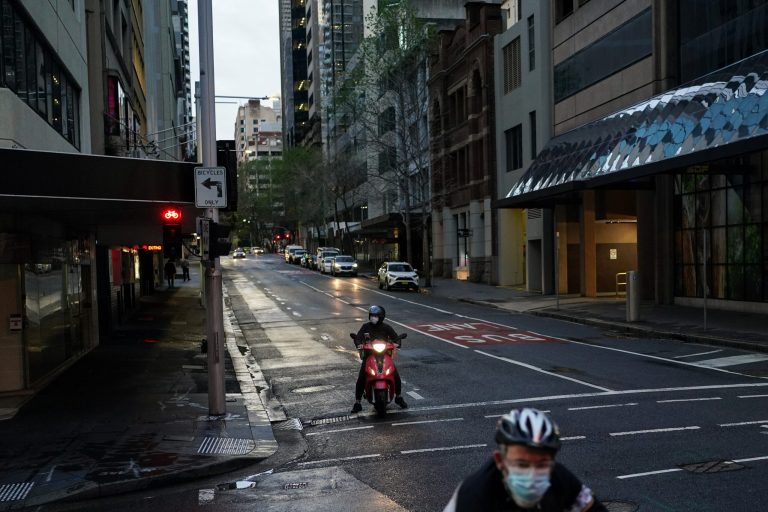
From November, Australia’s international border will reopen, granting vaccinated citizens and their relatives long-awaited freedoms.

Since March 2020, Australia has had some of the tightest border controls in the world, including a restriction on its own citizens leaving the nation.

Although the programme has been hailed for assisting in the suppression of Covid, it has also resulted in the controversial separation of families.

People will be able to travel whenever their state’s vaccination rate reaches 80%, Mr. Morrison said at a press conference on Friday.

Ian Jasper, who spent many years in Australia before returning to England, plans to visit three of his children, nine granddaughters, and four great-grandchildren in Perth, Australia, in December.

He said he planned to spend three months in Australia for Christmas and the wedding of his granddaughter in February.

Henry Aldridge is also looking forward to visiting his parents and five siblings in London for Christmas. When he and his partner, Shana, an Irish nurse who lives with him in Sydney, learned the news, they were almost in tears.

Only extreme circumstances, such as a necessary job or visiting a dying relative, allow people to leave Australia, which has had more than 107,000 cases of Covid-19 and just over 1,300 deaths.

Citizens and anyone with exemptions are allowed to enter, although there are strict limits on the number of people who can enter. Thousands of people have been trapped in other countries as a result of this.

Unvaccinated travellers must still stay in hotels for 14 days.

Qantas, an Australian airline, replied by stating that it would resume international flights a month sooner. It had already begun selling tickets to major international locations on the 18th of December.

New South Wales, which contains Sydney, is on track to become the first state to reach the 80% mark in a matter of weeks. Victoria, which includes Melbourne, isn’t far behind. States like Queensland and Western Australia, on the other hand, have threatened to close their borders unless immunisation rates rise much higher. After closing their borders to states with infections, these states have managed to keep Covid rates at or near nil.

Sheriff Tiraspol’s Sebastien Thill has remembered objective that stunned Real Madrid ‘more than 100 times’

0

Sebastien Thill, a midfielder for Sheriff Tiraspol, claims he has seen his winning Champions League goal against Real Madrid “over 100 times.”

Thill’s brilliant half-volley against the 13-time European champs was one of the biggest upsets of the tournament. The Luxembourg international, 27, has been reminded of his big moment at the Bernabeu on a daily basis.

Beside boosting his own profile, Thill’s objective guaranteed the Moldovan heroes kept up with their 100% record – in their first season in Europe’s greatest club rivalry.  What’s more, with an excursion to the San Siro to confront Italian heroes Inter Milan next on 19 October, Thill says their minnow status can work in support of themselves against more famous adversaries. 

“We examined Real Madrid and we realized we could dominate the match,” Thill added. 

“Our mentor told us not to be reluctant to play football and that we expected to partake in this second against a major group in a major arena and one that we have imagined about.

“We are the littlest group in the Champions League so we don’t have anything to lose. We can just dominate these matches so obviously we play unafraid 

Thill joined Sheriff borrowed in January from Progres Niederkorn in his country. He had likewise been borrowed at FC Tambov – a Russian club who were broken down in May subsequent to pronouncing themselves bankrupt. 

“This objective presently is stunning. It’s the most lovely and significant objective in my profession,” he said. 

“As a youngster everybody dreams to play against the greatest group in the Champions League. [At first] you don’t understand you have scored the triumphant objective in the Bernabeu. It is solely after the game you begin to ponder this. 

“We don’t come down on ourselves now. Right now we don’t ponder qualifying, pretty much the following game or getting done with 10 focuses or nine focuses. We need to dominate all the matches.”

Disney and Scarlett Johansson have reached an agreement over the film Black Widow

0

A legal battle between Walt Disney and Scarlett Johansson over the distribution of the Marvel superhero film Black Widow has been resolved.

Johansson filed a lawsuit against Disney two months ago, alleging that it violated her contract by releasing the film on its Disney+ streaming service while it was still in theatres. She claimed that the ruling deprived her of prospective revenue. The arrangement between Disney and Johansson is still being worked out.

Johansson also expressed her delight at having addressed her problems with the entertainment mogul and expressed her eagerness to work with him again in the future. Johansson played the Russian assassin-turned-Avenger superhero Black Widow in the film, and she has now appeared in nine Marvel flicks.

In July, she filed a complaint in Los Angeles County Superior Court. It said that she was assured that Black Widow would be a “theatrical release” by Marvel Studios, which is controlled by Disney.

She took this to suggest that a “window” of time would pass before it was streamed, which she stated had historically lasted 90 days.

Black Widow, which opened in theatres and on Disney+ on July 9th, established a box office record for a movie during the coronavirus pandemic in its first weekend, grossing $218 million (£161 million), although box office receipts dropped drastically after that.

According to the film tracking firm Box Office Mojo, it has now grossed more than $378 million worldwide.

In its first 20 days of release, the picture also made nearly $60 million in streaming purchases, according to Disney.

Several major Hollywood studios chose to circumvent cinemas, which had been shuttered in many cases, and instead broadcast films online throughout the pandemic.

Now that most theatres have reopened, Disney and Warner Bros. have decided to continue with their dual release plan for their blockbuster pictures.

In 2018 and 2019, Johansson led Forbes magazine’s list of the world’s highest-paid actresses, with pre-tax earnings believed to have reached $56 million in the year to June 2019.

President Biden pledges 500m more vaccine doses to developing world

0

President Joe Biden will make the pledge at a virtual Covid-19 summit on the sidelines of the UN General Assembly, US officials have said.

The additional jabs will see the total US commitment on vaccine sharing exceed one billion jabs.

Experts say some 11 billion doses are required to vaccinate at least 70% of the global population.

The World Health Organisation has set a minimum target of 40% vaccine coverage in every country by the end of 2021.

But the goal is unlikely to be met.

While many high-income countries have now given at least one shot to more than half their populations, only 2% of people in low-income countries have had their first dose, according to data from the University of Oxford.

Global vaccine supply is still lagging

It’s a big pledge but it’ll be met with a fair share of scepticism from countries still waiting to vaccinate even 2% of their population.

The US had already pledged 580m doses but delivered only 140m of those so far.

So what’s different now? Well, global production has picked up in the past few months and there are doses available.

Rich countries could have 1.2bn spare doses by the end of the year, even if they run booster campaigns, according to science analytics firm Airfinity. 241m of those could go to waste if they’re not donated. But these need to be sent very soon.

Covax, the WHO-backed scheme to help distribute vaccines fairly, has told the BBC that too many of the donations it’s receiving have come in small quantities, at the last minute and with little time left before they expire.

That makes their job of getting them to where they are needed very hard. If Biden want to meet this ambitious goal of vaccinating the world by this time next year, that will have to change.

Source: BBC

Solace for the Sovereign Soul, An argument for a new deal with indigenous peoples

0

We need to recognize that the last five centuries of human progress has meant havoc to the lebenswelt of indigenous people – their world of lived experience. Their suffering continues today, and remains relentless in its intensity and the despair it creates.

Unimaginable precarities in daily living, large scale land alienation, loss and degradation of livelihoods, habitats and natural resources keep pushing the majorities of the indigenous (including also the term tribal peoples) to join the ranks of unprotected, informal wage workers. A recent ILO report reveals that indigenous peoples , are three times more likely to living in extreme poverty than others; and nearly a fifth of the world’s extreme poor are indigenous peoples, with over 86% in the unprotected informal wage sector. Occupying the lowest spectrum in the world of work and in social hierarchies across all the nation states of today, the indigenous are frequently objects of racial hatred and “othering”.

Development programmes that have been designed for them, have done little to address their life worlds and aspirations. Most often they remain the last to receive the benefit of public services, and face multiple barriers to access justice and participate in political processes. Estimates of the Inter Parliamentary Union tell us they represent far below 6% of the parliamentary seats, the percentage their population should entitle them to in representative democracies of today. The last such survey found out that 2.2% of the more than 44,000 parliamentarians were from indigenous communities, and overwhelmingly men.

Violence and oppression was brought to indigenous communities by settler colonisation and other forms of colonisations, and through theft of their land and resources. New studies indicate that colonisation by Europe of the indigenous people of America for example, led to the demise of roughly 56 million people or 90% of those who lived in pre-Columbus America. Referred to as the “great dying”, at that time 10% of the global population had perished with occupations, killings and the diseases brought. Similarly estimates from John Harris tell us that in the first ten years arrival of Captain Arthur Phillip in 1788, the indigenous population of Australia reduced by over 80% as a result of violent and disease spreading colonisation. Figures of indigenous and tribal people who perished to violent occupations or were displaced by subsequent “development policies” in several other lands such as Brazil, Ghana, India, Indonesia, and several modern nations of South Americas are lost in time or to selective data captures. But by no stretch of imagination was it a natural “fading away” or integration of indigenous on these lands; rather it was the annihilation for the indigenous peoples.

It would be a great dishonour to the memory of all indigenous women, men and children who perished in struggle and a dishonesty to history, to depict these occupations as march of time in service of progress and nation building.

Over centuries, tribal communities developed unique governance institutions which were both defined by, as well as defined their existence and way of life. Many of these institutions, it needs to be remembered, were built on a strong base of caring and sharing, of solidarity and consensus and a lifestyle based on a strong relationship between nature and culture – and a society premised on cooperation rather than competition.

And it is these rooted peoples’ democracies, that provided the stimulus and the core strength to resist colonisation, repeatedly. From the oral traditions of indigenous communities, and from the accidental chronicles of early travellers and students of society can be extracted truths, which silences of history have buried – singular and courageous fights of indigenous peoples or the “Indians” in the Americas; of Bantus in South Africa; of the Mundaris and Santhals in India, aboriginal tribes in Australia, indigenous peoples in Indonesia and across the world, who asserted their rights to historical homelands and fought colonisations and violent occupations as sovereign people.

The struggles of indigenous peoples have resulted in a governance system, where tracts of lands are set aside homelands of tribal communities. This has been embodied variously in the shape of promises of Indian Reserves in Canada, the outstation or homeland movement in Australia, the indigenous territories in the Amazon, the Native American Reservations and Territories in the USA, or Schedule V and VI areas in India. In several countries these promises or treaties formed an element of the national Constitutions.

However, the spirit of these treaties and agreements have not been respected in implementation, especially where such promises interfered with the interests of the majorities. Indigenous communities, with six per cent of the global population are custodians of roughly 80 per cent of the planet’s biodiversity. As per World Bank Estimates, they own, occupy or use a quarter of the worlds surface area – and with it, the untapped stocks of natural resources and food crops.

Violent occupations of colonial times have given way to a scramble for grabbing indigenous resources, and new forms of colonisation, and this has also caused a new resurgence of struggle of indigenous self-assertion. Recent instances include the Standing Rock Sioux tribe protesting to stop the Dakota Access Pipeline, the Pathalgadi movement in Chota Nagpur region of India, where through the act of carving orders as edicts on stones, tribal people asserted their right to self-governance; the “Ipereg Ayu” Munduruku indigenous people’s resistance against illegal gold mining in Amazon which was recognised with the 2015 United Nations Development Program’s (UNDP) Equator Prize or the 2017 call of Aboriginal and Torres Strait Islander tribes of Australia for sovereignty, fleshed in their Uluru statement of from the heart.

There is a strong argument that if their autonomy and way of life is respected, then the custodianship of planet Earth’s biodiversity in the hands of indigenous communities may avert both a socio-economic, as well as an ecological crisis. In doing so, the world would also see an end to the saga of continued suffering for the indigenous peoples.

Without getting trapped into the colonial reductionism of the noble savage or the brutal savage, or for that matter into the limits of savaging the civilised,  we need to recognize that the world of indigenous communities is anchored in solidarity and cooperation, and their socio-economic organisation offers a different pathway of living together, well and differently. Their traditional knowledge can provide new impetus to modern science and technology. Their relationship with nature can provide an alternative to the economic impasse our resource extractive consumption hungry economic model has led us too. In the Andean indigenous peoples ontology the term community encompasses nature as well as culture, ending the dualism we have from the western world, and thus placing a different compass for ethics, morality, social and economic progress in terms of “buen vivir” i.e. living well and being well, an idea which the indigenous peoples and their parties got adopted to the Equadorian and Bolivian Constitutions to start reshaping the purpose of public policy and nation building with. It is not just the plain “ownership” right over homelands in its commodified rendering, but with it the idea of custodianship in the interests beyond the social world.

Therefore, the agency of tribal and “indigenous” people that emphasises their rights over habitats and historical homelands in this inclusive sense, and their own systems of governance, land and resource use patterns advances a great opportunity for our society, while also giving momentum to the unfinished and awaited task of decolonisation. A task, whose fulfilment would liberate into a world of justice and equality, a large mass of humankind.

In the face of centuries of agony, this is the solace the sovereign indigene soul is looking for.

At this stage, modern nation states could do well to undertake steps to restore the dignity and identity of indigenous peoples of the world. While their rights and identities have been trampled by colonialism and occupations, and the long march of history cannot be altered now, what is important to is to recognise, acknowledge fallacies, pay homage and correct futures.

The several millennia old link that indigenous people, and their unrecognised, yet continued civilisation has had with the planet Earth, should not be severed for the sake of wisdom that are only a few centuries old.

We could begin with truth-telling about the times gone by – a recognition of the glory and sacrifice of indigenous people, an acknowledgement of the oppressions they have faced, accompanied by an open call to jointly develop futures together with indigenous communities. New treaties need to be developed and nourished by the essence of what indigenous communities now want, forming the base for further development of those rights in Constitutions. There should be a timebound commitment for a public policy that would seek to nourish the sovereign soul of the indigene. As the Uluru statement of 2017 called “This sovereignty is a spiritual notion: an ancestral tie between the land, or “mother nature”, and the Aboriginal and Torres Strait Islander peoples who were born therefrom, remain attached thereto, and one day must return thither to be united with our ancestors… a basis… of sovereignty. It has never been ceded or extinguished.”

The new deal with indigenous communities across the world must see the blossoming of this sovereign soul. It is only then we will see the birthing of a just, equal and sustainable world in balance with nature, and at peace with itself.

China pledges to stop building new coal energy plants abroad

0

China will not build new coal-fire projects abroad, a move that could be pivotal in tackling global emissions.

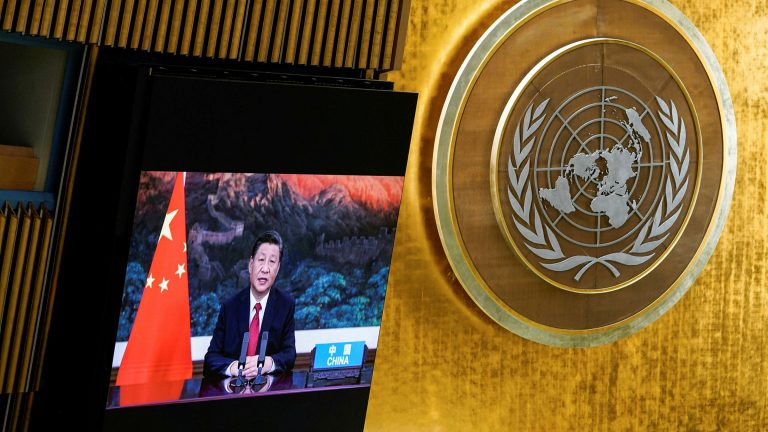
President Xi Jinping made the announcement in his address at the United Nations General Assembly.

China has been funding coal projects in countries like Indonesia and Vietnam under a massive infrastructure project known as the Belt and Road initiative.

But it has been under pressure to end the financing, as the world tries to meet Paris climate agreement targets.

“China will step up support for other developing countries in developing green and low-carbon energy, and will not build new coal-fired power projects abroad,” Mr Xi said in a video recording at the annual summit.

No further details were provided, but the move could limit the expansion of coal plants in many developing countries under China’s Belt and Road Initiative (BRI).

The BRI has seen China fund trains, roads, ports and coal plants in numerous countries, many of them developing nations. For the first time in several years however, it did not fund any coal projects in the first half of 2021.

China is also the world’s largest greenhouse gas emitter and is heavily reliant on coal for domestic energy needs.

Mr Xi mentioned promises made last year about China achieving peak emissions before 2030 and then transitioning to carbon neutrality by 2060.

  • China sets surprise 2060 carbon neutrality goal

The US Climate Envoy John Kerry welcomed the announcement, saying in a statement that he was “absolutely delighted to hear that President Xi has made this important decision”.

The head of the COP26 United Nations Climate Change Conference due to be held in Scotland next month also applauded the news.

“It is clear the writing is on the wall for coal power. I welcome President Xi’s commitment to stop building new coal projects abroad – a key topic of my discussions during my visit to China,” Alok Sharma said on Twitter.

his is the announcement that China has increasingly been expected to make.

For nearly a decade now coal fired power stations have been a key feature of Xi Jinping’s awkwardly named Belt and Road Initiative of foreign investment.

However, the reality is that the number of these projects has fallen significantly.

Crucial details will need to be cleared up; when will this take effect? Will it cover new power plants approved but not yet built? Will China also stop financing new coal fired power stations abroad?

This is progress, but it’s the low hanging fruit in terms of China’s addiction to coal.

Half the coal burned in the world is burned in China. It is still adding numerous new coal power plants at home, with a lifespan of 40 to 50 years.

The biggest question remains: When will this country start to cut the overall number within its borders and substantially reduce its dependency on the most polluting form of power generation?

Mr Xi’s address came after US President Joe Biden gave his maiden speech at the United Nations during which he urged countries to work together as never before to tackle global problems such as climate change and the pandemic.

Mr Biden also said that democracy would not be defeated by authoritarianism, but refrained from mentioning China by name.

“The future will belong to those who give their people the ability to breathe free, not those who seek to suffocate their people with an iron hand,” Mr Biden said.

“We all must call out and condemn the targeting and oppression of racial, ethnic, and religious minorities, whether it occurs in Xinjiang or northern Ethiopia, or anywhere in the world,” he added, referring to the western Chinese region where China is accused of using forced labour.

Relations between the US and China are at an all time low over issues including trade, human rights and the origins of Covid-19.

In his address, Mr Xi said that China had peaceful intentions in international relations.

But he also seemed to address the tensions and the formation of alliances in the region like the “Quad” grouping, made up of Australia, the US, India and Japan, saying there was a need to “reject the practice of forming small circles or zero-sum games”.

Sorce: BBC

Mary Keitany: Kenyan world record holder retires

0

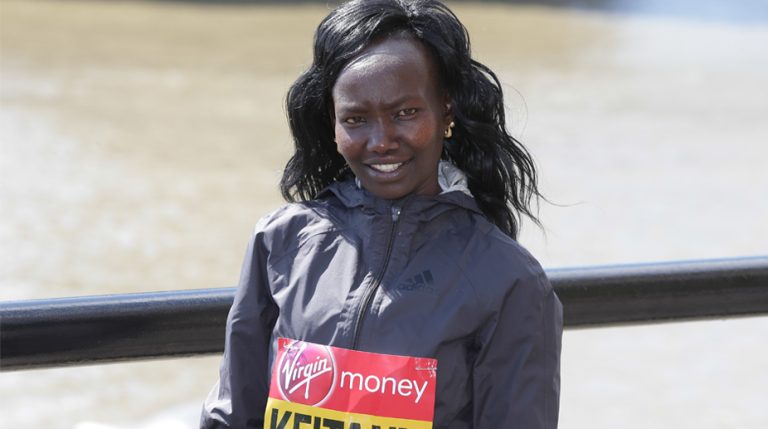
Kenyan marathon runner Mary Keitany has announced her retirement at the age of 39 because of a back injury.

Keitany holds the world record for a women-only marathon with a time of two hours 17 minutes and one second, which she set when winning her third London Marathon in 2017.

She also won the New York Marathon on four occasions.

“Now is the time to say goodbye – if only as an elite runner – to the sport I love so much,” she said.

“After my successful 2019, when I had some good results including second place in New York, I was hopeful that I could still be very competitive internationally for several more years even though I am in my late 30s,” Keitany added in her statement.

“However, I’m sad to say, a back injury that I suffered in late 2019 made a decision about my retirement for me.

“I couldn’t get the treatment I wanted in Europe because of the pandemic-related travel restrictions last year and every time I thought I had got over the injury and started training hard, it became a problem again.

“As for the future, I haven’t fully decided on my plans but I’m looking forward to spending more time with my family – my children are currently 13 and eight. In addition, I am involved with some local charitable enterprises.”

Keitany’s first global success came in 2007 when she won an individual silver and team gold at the World Half Marathon Championships.

A year after the birth of her first child in 2008, she claimed the world half marathon title in Birmingham, England. Her efforts also helped Kenya win the team title once again.

In 2010, she moved up to marathons and finished third in the New York on what was her debut and then a year later she won the first of her London Marathon titles.

Her second child arrived in 2013 and she once again made an impressive return to competition as she won three consecutive times in New York between 2014 and 2016 before winning or a fourth time in 2018.

She also set a world record at the 2011 RAK Half Marathon in the United Arab Emirates, a mark which stood for three years when it was broken by her compatriot Florence Kiplagat at a race in Barcelona.

One disappointment during her illustrious career was a fourth place in the London 2012 Olympic Games marathon.

Source: BBC

Afghanistan: Defence secretary angered over data breach

0

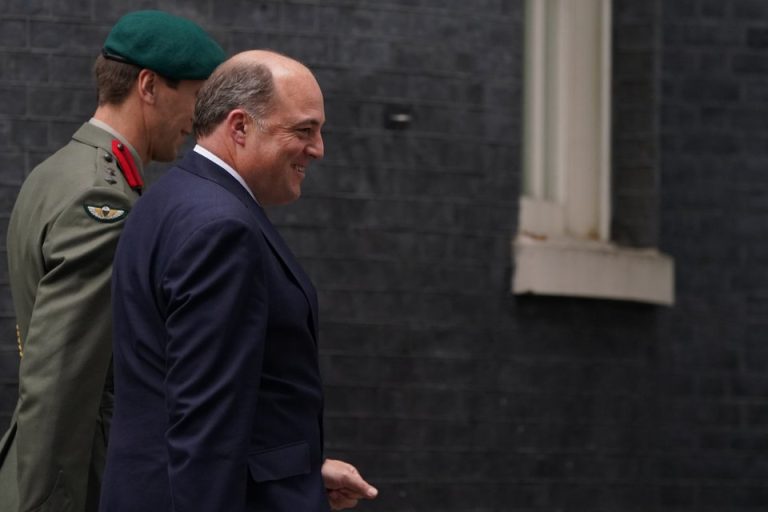
Defence Secretary Ben Wallace has said it would be an understatement to say he was angered by a data breach involving the email addresses of dozens of Afghan interpreters who worked for UK forces.

More than 250 people seeking relocation to the UK – many of whom are in hiding – were mistakenly copied into an email.

Mr Wallace has apologised to them, and launched an investigation. One person has been suspended, he said.

The MoD has also referred itself to the Information Commissioner’s Office.

Speaking in the Commons, Mr Wallace said: “I apologise to those Afghans affected by this data breach and with Home (the Home Office) we are now working with them to provide security advice.

“It is an unacceptable level of service that has let down the thousands of members of the armed forces and veterans. On behalf of the Ministry of Defence, I apologise.”

He added that armed forces minister James Heappey was in the region speaking to neighbouring states to see what more could be done with third countries and in-country applicants.

  • Life under Taliban rule one month on
  • Veteran’s joy at seeing Afghan interpreter in UK
  • Stay home, female Kabul government workers told

The email was sent to interpreters who remain in Afghanistan or have been able to get to other countries.

Their email addresses could be seen by all recipients, showing people’s names and some associated profile pictures.

Earlier the Information Commissioner (ICO) said it had contacted the department to make enquiries.

A spokesperson for the ICO said: “People rightly expect that their personal information will be handled securely especially in circumstances where its loss could have devastating consequences, including possible threat to life.”

Conservative MP Tobias Ellwood, who chairs the defence select committee, warned that the Taliban had not changed.

“We must get these interpreters out or they’ll be hunted and killed,” he told MPs, and suggested using “clandestine means” to get them to safety, if usual methods were unavailable.

“All means will be explored,” Mr Wallace replied.

The email was sent by the team in charge of the UK’s Afghan Relocations and Assistance Policy (Arap), which has been in contact with them since the Taliban took control of the country last month.

The team told the interpreters it was doing everything it could to help relocate them.

It also said they should not put themselves or their families at risk if it was not safe for them to leave their current location.

But one interpreter who received the email realised that more than 250 Afghans who worked with British forces had been copied into the email.

“This mistake could cost the life of interpreters, especially for those who are still in Afghanistan,” they told the BBC.

“Some of the interpreters didn’t notice the mistake and they replied to all the emails already and they explained their situation which is very dangerous. The email contains their profile pictures and contact details.”

The MoD then sent another email 30 minutes later with the title “Urgent – Arap case contact” asking the recipients to delete the previous email and warning “your email address may have been compromised”.

It recommended the interpreters change their email addresses.

Mr Wallace said the Ministry of Defence believed there were 900 “credible cases” for Arap resettlement still in Afghanistan beyond the 311 the government is currently speaking to.

Labour shadow defence secretary John Healey welcomed the defence secretary’s apology but told the Commons that action now mattered most.

He told MPs: “These Afghan interpreters worked alongside our British forces and the government rightly pledged to protect them. Ministers must make good on those promises now.”

After the BBC approached the Ministry of Defence, the defence secretary was angry enough to order an immediate inquiry.

It’s likely this data breach was just human error, and the apology is certainly sincere, but there are obviously concerns if the email addresses, names and pictures fall into the wrong hands.

While the military evacuation on the ground was rightly lauded, the failure to get all those who worked with British forces out has left hundreds stranded and in hiding.

Just this week we spoke to the family of an eight-month-old British baby who is still stuck there, an interpreter who is on the run fearing for his life, and another interpreter who just does not know what to do.

This data breach just compounds their safety concerns.

R. Kelly is unlikely to testify during his trial

0

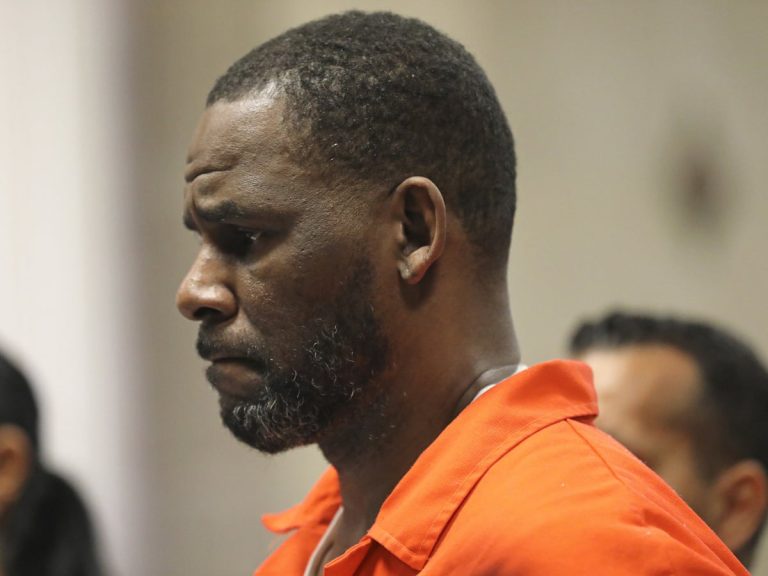
According to a list of witnesses provided by R. Kelly’s lawyers, he is unlikely to testify in his sex trafficking trial. After a month of gruesome testimony from a series of men and women who accused Mr. Kelly of abusing them as youths, the star’s defence began on Monday. Mr. Kelly had never acted inappropriately toward minor girls, according to the first two defence witnesses. The 54-year-old musician denies all claims levelled against him.

These charges include one count of racketeering and eight counts of violating the Mann Act, which prevents individuals from being transported across state boundaries for the purpose of prostitution.

Prosecutors have painted the singer, whose real name is Robert Sylvester Kelly, as a predator who groomed and preyed on young girls as far back as the mid-1990s, when songs like I Believe I Can Fly and She’s Got That Vibe catapulted him to popularity.

The singer Aaliyah, who was 15 when Mr. Kelly married her unlawfully in 1994, is one of his claimed victims. The marriage was later declared null and void, and Aaliyah died in a plane crash in 2001.

The jury in Brooklyn heard from a number of men and women who said that the singer took control of their lives by enforcing harsh restrictions about when they could eat, sleep, and go to the restroom, as well as pressuring them into sexual acts that he would frequently videotape.

Kelly was accused by several witnesses of omitting to inform them that he had the sexually transmitted disease herpes, which they later caught following sexual contact with him.

Mr. Kelly’s lawyers say they want to summon roughly a half-dozen additional witnesses, including an investigator, an accountant, and a friend of Jerhonda Pace, the first complainant to testify in the case.

Mr. Kelly’s name did not appear on the list. In an angry and tearful TV interview, the star previously protested his innocence, possibly making his lawyers wary of a similar outburst in court.

Whatever the outcome of the Brooklyn trial, the singer faces a separate trial in Chicago for child pornography and obstruction, as well as sex abuse charges in Illinois and Minnesota.’

SpaceX just brought the first all-tourist crew back from space

0

Four people, all of whom just six months ago had no formal spaceflight training, strapped themselves into a SpaceX capsule atop a 200-foot-tall rocket and took a three-day spin around Earth. After splashing down off the coast of Florida on Saturday, the passengers emerged from their capsule, smiling and waving, if a little unsteady after spending nearly 72 hours in weightlessness. SpaceX says it’s just the beginning.

The crew included 38-year-old billionaire Jared Isaacman, who personally financed the trip; Hayley Arceneux, 29, a childhood cancer survivor and physician assistant at St. Jude Children’s Research Hospital; Sian Proctor, 51, a geologist and professor; and Chris Sembroski, a 42-year-old Lockheed Martin employee and lifelong space fan who claimed his seat through an online raffle.

Inspiration4, as the tourism mission that concluded Saturday was called, was far from the first time people who don’t list astronaut as their day job have been to space. In the 2000s, a cohort of wealthy thrill seekers paid their way onto the International Space Station, traveling via Russian Soyuz rockets. And in July, billionaire space company founders Richard Branson and Jeff Bezos each took a brief trip to suborbital space in spacecraft their respective companies built.

The Inspiration4 flight was notable, however, because it was the first time SpaceX had used one of its Crew Dragon spacecraft, which was developed to carry professional astronauts to and from the International Space Station on behalf of NASA, for an entirely private mission.

SpaceX has even more such missions on its Crew Dragon schedule, including five already contracted for additional groups of tourists to fly in the months and years ahead. The company is underway developing its “Starship” vehicle, a gargantuan rocket and spacecraft system that promises to be the most powerful ever launched. Japanese billionaire Yusaku Maezawa has also booked a trip on that rocket for a trip around the moon, and NASA could use it for its lunar landing ambitions.

SpaceX’s goal is to make extraterrestrial travel a more regular occurrence so that — if and when Earth’s orbit is home to extraterrestrial hotels and manufacturing facilities — outer space becomes relatively more accessible for the general population. Space tourism may also one day help fund SpaceX’s ambitious goals of attempting Martian colonization.

Manny Pacquiao: Boxing star to run for Philippines president

0

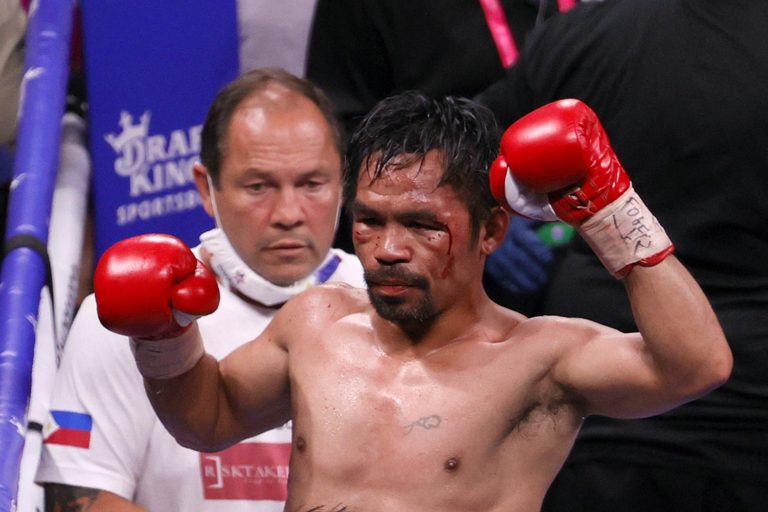
hilippine boxing star Manny Pacquiao says he is to run for president in next year’s election.

He was nominated as a candidate by a faction of the ruling party, PDP-Laban.

On top of a glittering career as a fighter, Mr Pacquiao, 42, is a senator in the Philippines’ parliament.

Incumbent Rodrigo Duterte is barred from another term but has been picked by a rival party faction to run for vice-president, a move critics say is an attempt to cling to power.

  • Philippines President Rodrigo Duterte to stand as vice-president

He was selected to run alongside a close ally, Christopher “Bong” Go, but Mr Go says he does not want to succeed Mr Duterte.

While his party says it wants Mr Go to reconsider his decision, his rejection of the nomination has led to suggestions that President Duterte’s daughter Sara Duterte-Carpio could join him on the ticket.

As a boxer, Mr Pacquiao won world titles in an unprecedented eight different weight divisions. He lost his most recent bout against a Cuban opponent and said he was considering retiring.

Accepting the nomination, he said: “I am a fighter, and I will always be a fighter inside and outside the ring.”

Mr Pacquiao has pledged to campaign against poverty and corruption.

He is a popular figure in his home country but faces an uphill battle, trailing in opinion polls consistently topped by Sara Duterte-Carpio.

It is not clear which of the PDP-Laban factions will be recognised by the country’s electoral commission for the 2022 election.

Metabolism peaks at age one and tanks after 60, study finds

0

Middle-aged spread cannot be blamed on a waning metabolism, according to an unprecedented analysis of the body’s energy use.

The study, of 6,400 people, from eight days old up to age 95, in 29 countries, suggests the metabolism remains “rock solid” throughout mid-life.

It peaks at the age of one, is stable from 20 to 60 and then inexorably declines.

Researchers said the findings gave surprising new insights about the body.

Ripped muscles

The metabolism is every drop of chemistry needed to keep the body going.

And the bigger the body – whether that is ripped muscles or too much belly fat – the more energy it will take to run.

So the researchers tweaked their measurements, adjusting for body size, to compare people’s metabolism “pound for pound”.

The study, published in the journal Science, found four phases of metabolic life:

  • birth to age one, when the metabolism shifts from being the same as the mother’s to a lifetime high 50% above that of adults
  • a gentle slowdown until the age of 20, with no spike during all the changes of puberty
  • no change at all between the ages of 20 and 60
  • a permanent decline, with yearly falls that, by 90, leave metabolism 26% lower than in mid-life

Childhood malnutrition

Other surprises came from what the study did not find.

There was no metabolic surge during either puberty or pregnancy and no slowdown around the menopause.

The high metabolism in the first years of life also emphasise how important a moment it is in development and why childhood malnutrition can have lifelong consequences.

“When people talk about metabolism, they think diet and exercise – but it is deeper than that, we are actually watching your body, your cells, at work,” Prof Herman Pontzer, from Duke University, told BBC News.

“They are incredibly busy at one year old and when we see declines with age, we are seeing your cells stopping working.”

People’s metabolism was measured using doubly labelled water.

Made from heavier forms of the hydrogen and oxygen atoms that make up water, this can be tracked as it leaves the body.

But doubly labelled water is incredibly expensive, so it took researchers working together across 29 countries to gather data on 6,400 people.

Drug doses

The researchers said fully understanding the shifting metabolism could have implications in medicine.

Prof Pontzer said it could help reveal whether cancers spread differently as the metabolism changes and if drug doses could be adjusted during different phases.

And there is even discussion about whether drugs that modify the metabolism could slow diseases of old age.

Drs Rozalyn Anderson and Timothy Rhoads, from the University of Wisconsin, said the “unprecedented” study had already led to “important new insights into human metabolism”.

And it “cannot be a coincidence” diseases of old age kicked in as the metabolism fell.

Obesity epidemic

Prof Tom Sanders, from King’s College London, said: “Interestingly, they found very little differences in total energy expenditure between early adult life and middle age – a time when most adults in developed countries put on weight.

“These findings would support the view that the obesity epidemic is fuelled by excess food energy intake and not a decline in energy expenditure.”

Dr Soren Brage, from the University of Cambridge, said the total amount of energy used had been “notoriously difficult to measure”.

“We urgently need to turn our attention not only to the global energy crisis defined by the burning of fossil fuels but also the energy crisis that is caused by not burning enough calories in our own bodies.”

Covid: The United States welcomes fully vaccinated visitors.

0

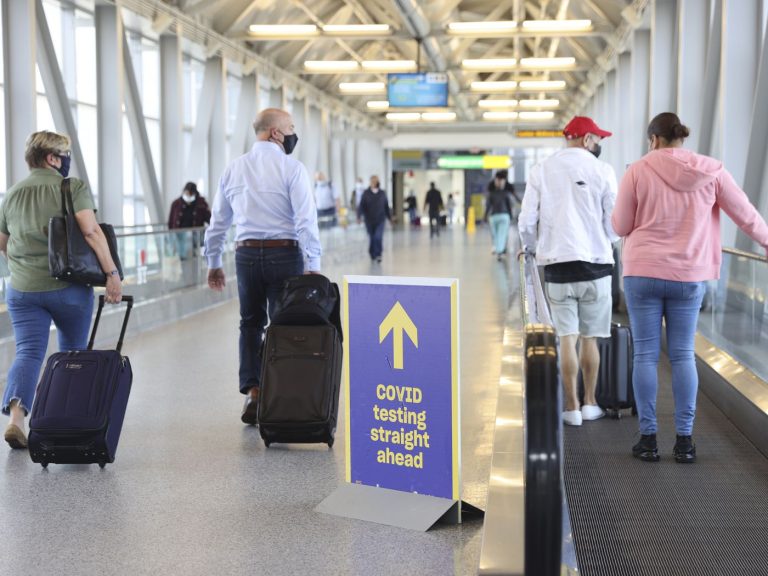
The United States is easing coronavirus travel restrictions and reopening its borders to passengers from the United Kingdom, the European Union, and other countries.

Foreign visitors will be allowed to fly into the United States starting in November if they are completely vaccinated and submit to testing and contact tracing. Since early last year, the United States has imposed tight travel restrictions. The move satisfies a significant demand from European allies, allowing families and friends who have been separated due to the restrictions to rejoin.

“This is predicated on individuals rather than a country-based approach, so it’s a better system,” said White House Covid-19 co-ordinator Jeff Zients on Monday. In early 2020, the United States implemented restrictions on Chinese travellers, which were later extended to other countries. Most non-US citizens who have spent the previous 14 days in the UK, a number of other European nations, China, India, South Africa, Iran, or Brazil are currently barred from entering.

Foreign travellers will be required to show proof of immunisation before travelling, acquire a negative Covid-19 test result within three days of flight, and provide contact information under the new guidelines. They won’t have to quarantine anything. Officials said the new policy would have limited exceptions, such as for youngsters who are not eligible for vaccination.

Americans who are not completely vaccinated will be allowed to enter, but they will be screened before and after their return to the United States.

Mr. Zients stated that the policy would take effect in early November, but he did not specify a specific date.

Many people were surprised by the loosening of travel restrictions after the US government declared last week that now was not the time to release them.

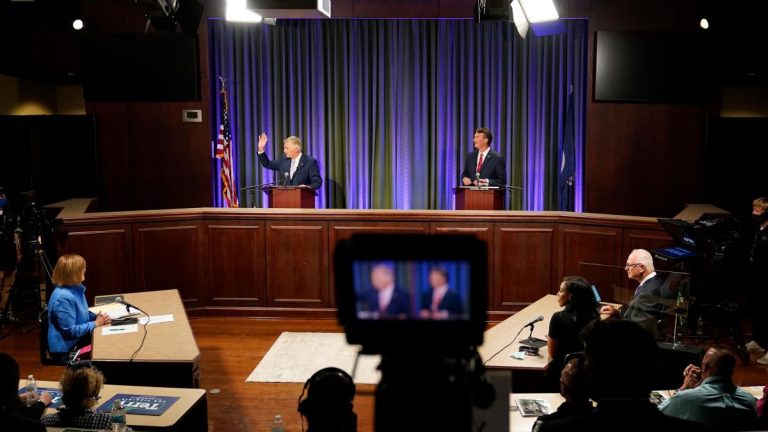
Why ‘all eyes’ will be on the Virginia suburbs this fall

0

Reassured by the results of California’s gubernatorial recall election last week, Democrats now face tougher electoral tests this fall that will measure whether they can defend their most important political advance of the Donald Trump era.

Big gains in well-educated inner suburbs ringing the nation’s major cities keyed all the Democratic victories throughout the Trump years, from their recapture of the House of Representatives in 2018 to President Joe Biden’s win in 2020. Now Democrats face the challenge of preserving those advances without Trump directly on the ballot.

Democratic Gov. Gavin Newsom’s decisive victory in the California recall election offered a positive sign, with partial results showing him matching or even exceeding his 2018 performance in the biggest suburban counties — and significantly improving over his already strong 2018 showing with college-educated White voters, according to exit polls. But preserving the party’s Trump-era gains with suburban voters may be tougher in the upcoming Virginia race to replace outgoing Democratic Gov. Ralph Northam.

Polls consistently show Republican nominee Glenn Youngkin, a wealthy political newcomer, staying surprisingly close to Democrat Terry McAuliffe, a former Virginia governor, in a state that has trended steadily blue over the past decade. McAuliffe’s best hope of repelling Youngkin’s challenge is to maintain the advantage Democrats have established in the state’s booming suburbs, particularly those in Northern Virginia near Washington and others around Richmond.

Whether McAuliffe can protect that ground will likely not only determine the Virginia governor’s contest but also offer a key gauge of attitudes across the broader suburban battlefield looming in the 2022 midterms.

“If you took the results of what happened in Virginia in 2017 and spread it across the country, that was 2018,” says Democratic consultant Bradley Komar, who served as Northam’s campaign manager in 2017. “So all eyes will be on Virginia to see if we are holding our gains in the suburbs. Are we motivating our voters without Trump in the White House?”

The 2016 presidential race produced a widening geographic divide, with Hillary Clinton and down-ballot Democrats improving in big urban centers and their inner suburbs and Republicans from Trump on down solidifying their control of small-town, exurban and rural communities. The 2017 Virginia governor’s race provided the first confirmation that this divergence would continue — and even intensify — with Trump in office.

In that race, Republican nominee Ed Gillespie generated big margins and passionate turnout from the state’s preponderantly White and culturally conservative smaller communities. But he was overwhelmed by a decisive move toward Northam in the state’s affluent, well-educated and racially diversifying suburban communities (along with solid African American turnout in cities such as Richmond and Norfolk).

Northam notably improved in the historically Republican-leaning suburbs of Richmond. But the big shift came in the growing Northern Virginia suburbs. Northam won the big five suburban counties outside Washington by a stunning 263,000 votes. That was about double the margin McAuliffe had squeezed from those same counties while winning the governorship in 2013 and a bigger net advantage than Barack Obama managed even with a presidential-year turnout in 2012. That suburban tsunami was enough to propel Northam to a commanding 9-percentage-point win overall in a state that previously had been considered a battleground between the parties.

Virginia set the pace in 2017

The 2017 Virginia model, largely mirrored that year in Democrat Phil Murphy’s win in the New Jersey governor’s race, set the mold for elections in the Trump years. In 2018, Democrats recaptured the majority in the House of Representatives by routing Republicans in more affluent and better-educated districts, literally from coast to coast. Before the election, as I’ve written, Democrats held 57% of the 182 seats with more college graduates than the national average; after the election, they held almost three-fourths of those seats.

The suburban wave largely rolled on through 2020. Big, sometimes enormous, gains in affluent, diverse inner suburbs were key to Biden’s victory in almost every closely contested state. Compared with Clinton in 2016, he swelled the margins by 100,000 votes in the four suburban counties outside Philadelphia, by 175,000 votes in Denver and its suburbs, and by 200,000 votes in Atlanta and its giant suburban neighbors. Biden comfortably carried Virginia by winning the big five suburban communities outside Washington by more than 500,000 votes, about 115,000 more than Clinton and more than double Obama’s advantage there just eight years earlier.

On the other side of this divide, Republicans through the Trump years benefited from expanding margins and explosive turnout among rural and small-town voters. Even in the 2018 Democratic sweep, that allowed Republicans to oust Democratic senators in North Dakota, Missouri and Indiana, three states with large White rural populations. Likewise, Trump’s rural strength allowed him to hold states such as North Carolina and even Texas despite big Biden gains in their metropolitan centers. Democrats in 2020 also faced the limits of their suburban gains, losing some of the 2018 seats they had won in more conservative suburban areas (like Charleston, South Carolina, and Orange County, California) and failing almost completely to capture any of the further House seats they targeted in more traditionally Republican suburbs around Dallas, Houston, St. Louis and Indianapolis.

Even with these caveats, the parties emerged from the Trump presidency confronting a widening trench between rising Democratic strength inside the nation’s major metro areas and consolidating Republican dominance beyond them. A key question for political professionals is whether those exaggerated patterns persist beyond Trump or, on both sides of the trench, revert somewhat toward the mean with him no longer at center stage.Last week’s results in the California gubernatorial recall pointed mostly toward persistence. In partial vote counts as of this weekend, more than three-fourths of voters opposed the recall in San Francisco and its big surrounding counties of Marin, Alameda and Santa Clara (the home of Silicon Valley); in each case those results matched or even exceeded the margins for Newsom in his 2018 win and Biden in 2020.In Southern California, as of the latest count, Newsom dominated the affluent Westside of Los Angeles, won a solid three-fifths of the vote in San Diego County and even narrowly carried Orange, San Bernardino and Riverside counties, suburban behemoths that Republicans once usually won. (Even if the final counts tilt any of those counties narrowly toward the yes position, Newsom at worst neutralized what was once a GOP strength.)The “no” vote amassed big margins in the more sparsely populated inland counties that have become the California GOP’s last redoubt, but until the final ballots are counted (a process that will take weeks), it won’t be entirely clear whether those places kept pace with the robust turnout in the blue-leaning population centers. While cautioning that the final numbers could point toward a different conclusion, Sean Clegg, a senior strategist for Newsom, says, “I think we got asymmetric turnout.”