TikTok launches a Dublin data centre to alleviate concerns about Chinese surveillance.

0

TikTok has taken a significant step in addressing concerns regarding data privacy and Chinese state surveillance by establishing its inaugural European data centre in Dublin. This move is part of the company’s ongoing efforts to distance itself from data sharing with China and bolster data protection for its European user base.

TikTok, under the ownership of Chinese company ByteDance, vehemently asserts that it has never shared user data with Beijing. However, critics remain wary, fearing that the Chinese government could potentially demand access to this data at any point in time.

To build trust and enhance security measures, TikTok has initiated “Project Clover,” signifying the importance of Ireland in this endeavor. This initiative aligns with “Project Texas,” where similar commitments were made to US authorities in 2020.

Earlier this year, TikTok faced a series of governmental restrictions due to cybersecurity and privacy concerns. Several institutions, including the UK government, the European Parliament, the European Commission, and the EU Council, banned the app from officials’ devices. A primary apprehension among European security officials is the risk of Chinese state access to user data through the app.

To alleviate these concerns, TikTok is now storing European user data locally. The Dublin data centre is operational, with plans for additional centres in Ireland and Norway’s Hamar region. These centres will manage the data of TikTok’s vast European user base, which exceeds 150 million users.

In a bid to enhance transparency and security, TikTok has engaged a European security company, NCC Group, to independently audit its data controls at the data center. The NCC Group will scrutinise TikTok’s operations, detect and respond to any suspicious access attempts, and collaborate on strengthening security measures.

TikTok intends to engage with European policymakers in the coming months to elucidate the practical implementation of this security system. By taking these measures, TikTok aims to demonstrate its commitment to safeguarding user data and assuage concerns about potential data sharing with the Chinese state.

Barbie surpasses Super Mario Bros. as 2023’s top-grossing movie

0

Barbie has officially claimed the title of the year’s highest-grossing box office sensation, surpassing the earnings of the Super Mario Bros. Movie in a surprising turn of events. The Barbie film, featuring Margot Robbie as the iconic doll, follows her escapades as she ventures out of her pink dreamland into the real world. This cinematic gem has now amassed a staggering $1.38 billion globally, edging past the Super Mario Bros. Movie’s $1.36 billion.

Notably, Barbie’s remarkable success has also contributed to a significant milestone in the US summer box office, breaking the $4 billion barrier for the first time since the pandemic’s onset. This achievement came as a surprise to analysts, who had not anticipated such a resurgence in cinema attendance. Two key releases, “Barbenheimer” (a blend of Barbie and Christopher Nolan’s Oppenheimer), both premiered on the same day in July, fueling box office earnings beyond last year’s total of $3.4 billion.

Moreover, industry experts initially predicted that the Super Mario Bros. Movie would reign supreme as the biggest film of 2023. However, Barbie, under the direction of Greta Gerwig, has defied these expectations.

Adding to the summer’s cinematic hits, “The Equaliser 3,” featuring Denzel Washington, made a significant splash during its debut weekend, raking in an impressive $34.5 million at North American box offices in its first three days.

Nevertheless, concerns are emerging within the Hollywood realm regarding a potential decline in box office performance for the remainder of the year. This apprehension stems from the delayed release dates of highly anticipated films such as “Dune: Part II,” “Kraven the Hunter,” and the sequel to “Ghostbusters: Afterlife,” all rescheduled for 2024. This shift is largely attributed to the ongoing Hollywood strike, which has hindered actors from promoting studio movies, creating an uncertain landscape for the entertainment industry.

Ukraine’s Defence Minister Resigns, Paving the Way for New Leadership

0
Ukraine’s Defence Minister, Oleksii Reznikov, has officially announced his departure from his long-held position. Mr. Reznikov, who had been at the helm of the ministry even before Russia’s extensive invasion in February 2022, is stepping down as President Volodymyr Zelensky seeks “new approaches” within the defence ministry.
President Zelensky disclosed Mr. Reznikov’s dismissal on Sunday, signalling a transition in Ukraine’s leadership. Rustem Umerov, who currently manages Ukraine’s State Property Fund, has been nominated as Mr. Reznikov’s successor.
On the social media platform X (formerly Twitter), Mr. Reznikov confirmed his submission of a resignation letter to the country’s parliament. Speculation in the Ukrainian media suggests that he might assume the role of Kyiv’s ambassador to London, where he has cultivated strong relationships with senior politicians.
Mr. Reznikov, a 57-year-old prominent figure since the onset of the conflict in Ukraine, is internationally recognised for his efforts in meetings with Ukraine’s Western allies and advocacy for increased military support.
Yuriy Sak, a Ukrainian defence advisor, acknowledged Mr. Reznikov’s role in transforming the ministry, emphasising its significance in the country’s aspirations to join NATO.
Mr. Reznikov’s resignation aligns with broader anti-corruption efforts within President Zelensky’s administration, crucial for Ukraine’s pursuit of Western affiliations, such as the EU. Ukraine’s standing in Transparency International’s Corruption Perceptions Index has improved in recent years, even though it still ranks 116th out of 180.
Although Mr. Reznikov himself faces no corruption allegations, the defence ministry has grappled with scandals involving overpriced procurement of goods and equipment for the army. His deputy, Vyacheslav Shapovalov, resigned earlier this year amid one such scandal.
Mr. Umerov, President Zelensky’s nominee for the role, previously represented Ukraine in peace negotiations at the onset of Russia’s invasion. He has also faced personal challenges, including a suspected poisoning during peace talks with Russian billionaire Roman Abramovich.
As Ukraine presses on with a deliberate counter-offensive, recent acquisitions of advanced weaponry from Western allies have been pivotal. Progress on the frontline has been steady, with Ukrainian generals reporting a breakthrough in a critical line of Russian defences in the south of the country. Simultaneously, Russia has reported thwarting drone attacks on its territory, underscoring the ongoing tensions in the region.

The UK economy thrived in the COVID era, displaying robust growth.

0

The latest official figures indicate a more robust recovery for the UK economy at the end of 2021 amid the ongoing COVID-19 pandemic than previously believed. New data reveals that, in the final quarter of 2021, the economy exceeded pre-pandemic levels by 0.6%, in stark contrast to earlier estimates suggesting a 1.2% contraction. This upward revision has been hailed by the government as evidence that naysayers who underestimated the British economy have been proven wrong.

The Office for National Statistics attributes these changes primarily to improved data quality from its annual survey. Additionally, the revised figures reveal that the economic downturn during the 2020 lockdown was milder than initially thought, with a 10.4% decline rather than 11%. Furthermore, the recovery in 2021 exhibited greater momentum, with a growth rate of 8.7% rather than the previously reported 7.6%.

However, it’s worth noting that, despite the significant discrepancy in economic performance between the end of 2021 and the preceding period, these fluctuations must be contextualized within the volatile environment created by the pandemic. The ONS points to several reasons for the revision, including companies holding unsold inventory during the pandemic and an adjusted calculation for health service output, particularly within the NHS.

When viewed in the context of the larger G7 economies, this revision could position the UK’s economic performance closer to that of France and Italy, with the potential to surpass Germany. Chancellor Jeremy Hunt sees this as validation that those who criticise the British economy have been proven wrong, though he acknowledges that challenges, such as inflation, remain to be addressed.

While this revision provides valuable insights into the pandemic’s lasting impact on the UK economy, it doesn’t provide a comprehensive picture of the current economic landscape, which is grappling with energy price shocks and rising interest rates—developments that occurred after these revisions. Importantly, the UK and the US are among the few countries to revise their 2021 economic data, raising the possibility that other major European nations like Germany, France, and Italy may follow suit, potentially revealing previously unseen nuances in their economic performance during the pandemic.

Global figures implore Bangladesh to halt Nobel laureate Muhammad Yunus’ persecution.

0

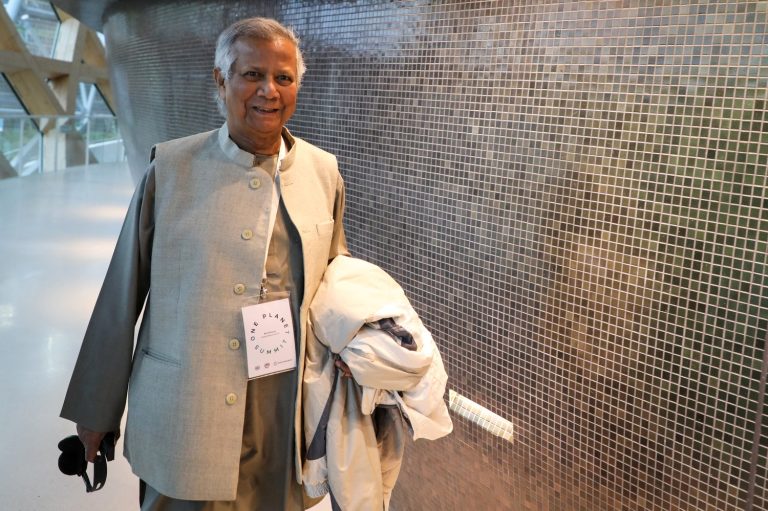
Over 170 prominent global figures have issued an appeal to Bangladesh’s Prime Minister, Sheikh Hasina, urging her to halt what they view as the “persecution” of Nobel laureate Muhammad Yunus. Known internationally as the “banker to the poor,” Yunus has been facing numerous lawsuits, with more added recently. The collective letter characterises these legal actions as an attack on democracy.

In response, Prime Minister Hasina offered a stern rebuttal, accusing the 83-year-old Yunus of seeking international attention through this statement. She, however, welcomed international experts to assess the ongoing legal proceedings against Yunus. It’s worth noting that while Yunus is celebrated in the Western world for his pioneering microloan concept, Hasina regards him as a public enemy, repeatedly labelling him a “bloodsucker” of the poor and criticising his Grameen Bank for high interest rates.

Grameen Bank, founded by Yunus in 1983, provides small, long-term loans to help impoverished individuals start their own small businesses, a model that has gained global recognition. In 2006, both Yunus and the bank were honoured with the Nobel Peace Prize.

The open letter, signed by influential figures such as Hillary Clinton, Richard Branson, and Bono, calls for an end to the “continuous judicial harassment” faced by Yunus, expressing a sincere desire for him to continue his groundbreaking work without persecution.

The cases against Yunus include accusations from former Grameen Telecom employees who claim he deprived them of job benefits. Additionally, he recently faced trial for alleged labour law violations. These legal challenges come at a critical time, just months before Bangladesh’s next general election, raising concerns about the need for free and fair polls.

Yunus has faced other legal issues in the past, including being forced out of Grameen Bank in 2011 and facing accusations of tax evasion in 2013.

Some experts suggest that Prime Minister Hasina’s opposition to Yunus may stem from resentment toward his global acclaim, potentially overshadowing her late father, Sheikh Mujibur Rahman, who is revered by many Bangladeshis for leading the country to independence. These sustained attacks on Yunus also raise concerns about a growing intolerance of dissent, posing a threat to the democratic principles upon which Bangladesh was founded.

Ana de Armas: Lawsuit regarding Yesterday movie trailer rejected by judge

0

Fans of Ana de Armas who took legal action against Universal Pictures have had their case dismissed by a US judge. The dispute arose when the actress was prominently featured in the trailer for the film “Yesterday” but was ultimately edited out of the final version. Conor Woulfe and Peter Michael Rosza, who rented the film for $3.99, accused Universal Pictures of false advertising, claiming they were deceived.

The film, directed by Danny Boyle, garnered $155 million globally and starred Himesh Patel, Lily James, and Ed Sheeran. The trailer included scenes where Patel’s character interacted with de Armas’s character, which were subsequently cut due to negative audience reactions. Screenwriter Richard Curtis explained the decision was due to maintaining Patel’s primary love interest, played by Lily James.

The disappointed fans sought $5 million in damages, arguing that the studio had exploited de Armas’s fame to promote the movie. They also claimed that trailers generally feature actors who appear in the film. One of the plaintiffs, Woulfe, even rented the film on Google Play based on the belief that de Armas might be in a director’s cut.

However, the judge ruled in favour of Universal Pictures, stating that the plaintiffs’ “injury is self-inflicted” since they had already watched the version on Amazon Prime where de Armas was absent. The court found no reason to believe that the Google Play version would differ. Universal’s lawyers emphasised that trailers are artistic expressions meant to convey the film’s general theme and often include scenes not in the final cut.

The judge concluded that the plaintiffs’ decision to watch the film was not influenced by Universal’s statements regarding de Armas’s appearance, leading to the dismissal of their case. This case highlights the complexities of promotional materials and audience expectations in the film industry.

G20: Putin informs India’s PM Modi of his non-participation in the Delhi summit.

0

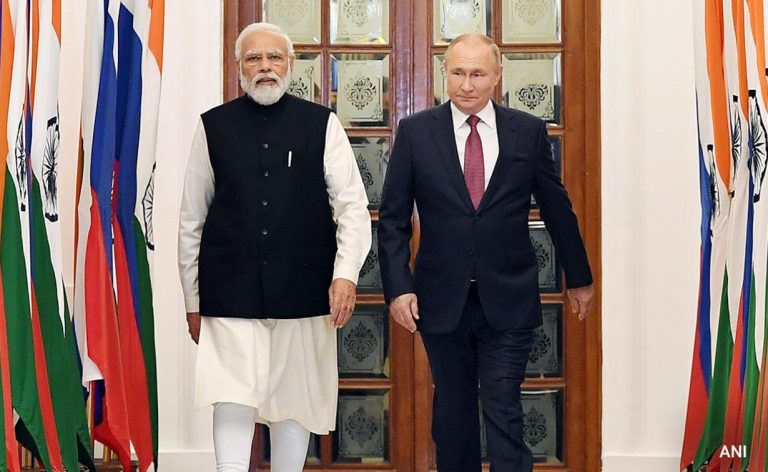
Russian President Vladimir Putin has informed Indian Prime Minister Narendra Modi that he won’t be present at the upcoming G20 Summit scheduled to take place in Delhi next month. India is the host country for this year’s summit, set to occur on September 9–10 in the capital city.

During a phone call between Putin and Modi, the Russian President conveyed that Foreign Minister Sergei Lavrov would represent him at the summit. Beyond this, the leaders engaged in discussions regarding matters of mutual interest on both regional and global fronts, as per a statement released by India.

A week prior, a spokesperson from the Russian government had cited a “busy schedule” as the reason for Putin’s non-attendance at the summit. India currently holds the G20 presidency, which rotates among member countries annually. Comprising the world’s 19 most affluent nations plus the European Union, the G20 serves as a platform for important global economic discussions.

At the Delhi summit, world leaders, including US President Joe Biden and UK Prime Minister Rishi Sunak, are expected to address significant topics. Notably, Russia’s incursion into Ukraine is likely to be a subject of discussion.

Putin had recently participated in the Brics summit through a virtual link, given the International Criminal Court’s (ICC) warrant for his arrest related to allegations of war crimes in Ukraine. The summit involved the participation of Brazil, Russia, India, China, and South Africa.

In response to Putin’s absence, India expressed understanding for Russia’s decision and extended gratitude for Russia’s support during India’s G20 presidency. Although Russia’s statement did not explicitly mention Putin’s non-attendance, it emphasised the intention to closely cooperate during Russia’s upcoming BRICS chairmanship, starting January 1 of the next year. The statement also underscored the progressive nature of the Russian-Indian relationship, which is characterised as a strategically privileged partnership.

Evergrande’s shares plummet 80% as the Chinese developer faces a crisis.

0

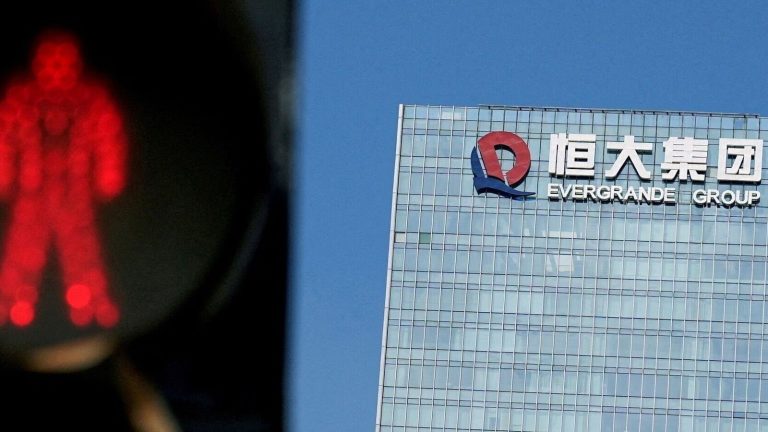
Shares of troubled Chinese developer Evergrande plummeted by approximately 80% as trading resumed in Hong Kong after a year and a half hiatus. The value of these shares has diminished by over 99% within the last three years, aligning with Beijing’s crackdown on property companies. Evergrande’s crisis is at the epicentre of real estate market turbulence, posing a significant threat to the world’s second-largest economy.

In a recent development, Evergrande disclosed a loss of 33 billion yuan ($4.5 billion) for the first half of the year. This marked an improvement compared to the 66.4 billion yuan loss reported during the same period the previous year. The company highlighted efforts made by its directors to bolster liquidity and its financial standing.

Despite a 44% surge in revenue for the first half of the year, reaching 128.2 billion yuan compared to the previous year, Evergrande’s cash reserves witnessed a 6.3% decline in the same period. The company had halted trading since March of the previous year.

The imperative for policymakers is to prevent financial contagion and limit its impact on the broader financial system, emphasised Qian Wang, Chief Asia Pacific Economist at Vanguard.

China’s property market struggles have added to concerns regarding the post-pandemic recovery of its economy. In response, the country halved a 0.1% tax on stock trading to stimulate the capital market and restore investor confidence. Moreover, China’s central bank cut a key interest rate for the second time in three months to counter declining exports and subdued consumer spending, both of which have hindered the nation’s economic revival.

China’s real estate industry underwent upheaval with the introduction of regulations in 2020 aimed at curbing borrowing by major real estate firms. Once a leading developer, Evergrande expanded aggressively, accumulating debts exceeding $300 billion, making it one of China’s largest companies. The company’s financial troubles have caused ripple effects in the property sector, with multiple developers defaulting on debts, leaving unfinished projects across the nation. In response, Evergrande has worked on renegotiating agreements with creditors and initiated a Chapter 15 bankruptcy protection filing in the United States, further reflecting the complexity of its financial situation.

Modi and Xi discuss and commit to easing India-China border tensions.

0

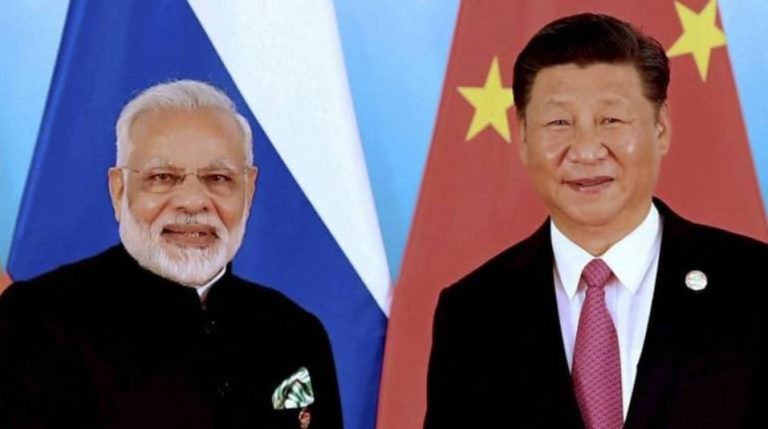
India and China have reached an agreement to ease tensions along their disputed border, following a conversation between their leaders during the Brics summit held in South Africa. Prime Minister Narendra Modi and President Xi Jinping engaged in talks to address the escalating situation between the two countries. The dialogue, initiated at Mr. Modi’s request, reflects the urgency of the matter. Over the past three years, India-China relations have been deteriorating, primarily due to conflicts along their shared 3,440km border in the Himalayan region, referred to as the Line of Actual Control (LAC).

The meeting, which took place on the sidelines of the Brics summit in Johannesburg, signifies a potential step towards reconciliation. The Brics alliance, consisting of Brazil, Russia, India, China, and South Africa, often acts as a counterbalance to Western-dominated geopolitics. Both leaders concurred on the need to restore peace and stability along the border, recognising its significance for normalising bilateral relations.

Indian Foreign Secretary Vinay Kwatra conveyed that Prime Minister Modi emphasised the importance of respecting the LAC and ensuring calm in the border regions. As a result, the two leaders have instructed their respective officials to intensify efforts to promptly disengage and de-escalate the situation.

China’s Foreign Ministry released a statement highlighting the substantial exchange of views between Xi and Modi regarding the current state of China-India relations and other mutual concerns. President Xi emphasised the value of strengthening bilateral ties for the interests of both nations and global peace, stability, and development. The statement urged both sides to approach the border issue in a way that safeguards tranquilly in the region.

Interestingly, the conversation took place without interpreters or note-takers present, underscoring the direct and candid nature of the discussion. This development follows their previous meeting on the sidelines of the G20 summit in 2022.

Additionally, President Xi’s anticipated attendance at the upcoming G20 summit hosted by India in September could have further diplomatic implications. In conclusion, the talks mark a significant step towards addressing the ongoing border tensions and fostering a more stable relationship between India and China.

Nvidia, a major AI chip maker, experiences over 100% sales growth.

0

Nvidia, a prominent technology company, has reported a remarkable surge in its sales, more than doubling its revenue due to the soaring demand for its artificial intelligence (AI) chips. The firm’s sales reached an unprecedented high, surpassing $13.5 billion in the three-month period ending in June. This outstanding performance has led the company to project even higher sales in the current quarter. In addition, Nvidia intends to repurchase $25 billion worth of its own stock. As a result of these positive developments, the company’s shares experienced a notable 6.5% increase during after-hours trading in New York, contributing to their substantial gains over the course of the year.

Nvidia anticipates generating approximately $16 billion in revenue for the three months ending in September, a figure that greatly exceeds the expectations of Wall Street analysts. This projection reflects a remarkable growth of around 170% compared to the same period the previous year. Jensen Huang, Nvidia’s CEO, declared the commencement of a new era in computing, characterised by the transition from general-purpose to accelerated computing and generative AI.

The driving force behind Nvidia’s strong performance is its data centre business, which prominently features AI chips. The revenue from this unit soared to more than $10.3 billion, marking a significant increase of over 170% from the previous year.

Nvidia’s stock market valuation has surged to over $1 trillion this year, with its shares experiencing a remarkable three-fold increase in value. This achievement has elevated the company into the ranks of the “Trillion Dollar Club,” alongside other major US companies like Apple, Microsoft, Alphabet, and Amazon.

Sarah Kunst, the managing director of Cleo Capital, expressed fascination with the growing enthusiasm around Nvidia. She highlighted how Nvidia has been manufacturing chips for a substantial period of time, but it’s only recently that the market has truly recognised their significance. Originally known for producing graphics processing units for computer games, Nvidia’s hardware has now become a foundational component for the majority of AI applications.

Nvidia’s impact extends even to AI models like ChatGPT, which was trained using thousands of Nvidia’s graphics processing units. The influence of AI products, including Nvidia’s chips, is expected to revolutionise how we interact with computers and their role in our lives.