Amazon will make a $25 million payment for violating children’s privacy.

0

To resolve claims that it breached children’s privacy rights with its Alexa voice assistant, Amazon will pay $25 million (£20 million).

Following accusations that it did not remove Alexa recordings at parents’ requests, the business agreed to pay the US “Federal Trade Commission (FTC).”

The company was discovered to have stored private information for many years.

In a document submitted to federal court in the District of Columbia, Ring promises to pay $5.8 million to the authorities.

According to the Alexa lawsuit filed by the FTC, Amazon “prominently and consistently assured customers, especially parents, that they could delete voice recordings captured” by the device.

The complaint, however, alleged that the company violated this practise by keeping data for years and using it for nefarious purposes to enhance the Alexa algorithm.

Samuel Levine, the director of the FTC’s Bureau of Consumer Protection, charged Amazon with deceiving parents, retaining children’s recordings forever, and disobeying deletion requests from those parents in a statement.

The FTC also claimed that Ring, which Amazon acquired in 2018, allowed “hundreds of staff members and contractors” to view recordings of consumers’ confidential areas.

Ring immediately rectified the relevant concerns on its own years ago, well before the FTC launched its investigation, according to a statement from Amazon.

The complaint, however, asserts that one employee watched hundreds of video recordings recorded by female Ring camera users who “surveilled intimate spaces in their residences, such as their bathrooms or bedrooms.”

The individual was only stopped, according to the complaint, after a coworker observed their activity.

Amazon stated: “While we disagreed with the FTC’s allegations concerning both Alexa and Ring and deny breaking the law, we have reached agreements to put these matters behind us.”

The business also stated that it would keep creating new privacy features for the sake of its clients.


The Detrimental Effects of Smoking on Skin, Hair, and Eyes Explored on World No-Tobacco Day 2023

0

On the occasion of World No-Tobacco Day, a deeper understanding of the detrimental impact of smoking on skin, hair, and eyes is sought. This annual awareness campaign, organized by the World Health Organization (WHO) and its partners, aims to shed light on the health risks associated with tobacco use and advocate for effective policies to reduce tobacco consumption globally. While smoking is widely known to harm internal organs, its visible consequences on external appearance are often overlooked. Recent research has increasingly revealed the alarming correlation between smoking and the damaging effects it inflicts on our skin, hair, and eyes. Today, we delve into this unsettling relationship to better comprehend the adverse impacts of smoking.

Skin bears the brunt of smoking’s repercussions. Dr. Bhooshan Zade, Director of Radiation Oncology at Ruby Hall Clinic, Pune, explains, “Smoking compromises skin health. The harmful chemicals present in cigarette smoke disrupt the skin’s natural balance, hastening the aging process and degrading its overall quality. Regular smoking contributes to the development of fine lines, wrinkles, and sagging skin. Carcinogens in tobacco smoke destroy collagen and elastin, which are vital for maintaining skin suppleness and firmness.”

Dr. Bhooshan further elaborates, “As a result, smokers often have dull, uneven skin tones and experience slower wound healing and skin injury recovery times. Smoking also exacerbates common skin conditions such as eczema, psoriasis, and acne. The chemicals in tobacco smoke induce swelling in the body, triggering flare-ups and worsening pre-existing skin problems. Additionally, smoking constricts blood vessels, reducing the supply of oxygen and nutrients to the skin. Consequently, smokers appear older than non-smokers, with a pale and sallow complexion.”

In addition to skin, smoking also adversely affects hair. Dr. Bhooshan highlights, “Smoking’s harmful vapors and chemicals weaken and shrink hair follicles, leading to hair loss and thinning. Studies have revealed a direct link between smoking and premature graying of hair, as smoking disrupts the production of melanin, which gives hair its color. Consequently, smokers may struggle with brittle, lifeless hair lacking vitality and volume.”

The damaging effects of smoking extend to the eyes, often referred to as the “windows to the soul.” Prolonged smoking exacerbates numerous eye diseases, including cataracts, macular degeneration, and dry eye syndrome. The accumulation of oxidative stress induced by smoking increases the likelihood of developing cataracts, which involve clouding of the eye’s natural lens. Moreover, smoking damages the delicate cells of the retina with hazardous chemicals, making smokers more susceptible to macular degeneration, a leading cause of blindness. Smoking also irritates the eyes, leading to dry eye syndrome characterized by redness, itching, and increased tear production. Dr. Bhooshan emphasizes that “the long-term impacts of smoking on our skin, hair, and eyes are undeniable.”

However, there is a silver lining: quitting smoking can help reverse some of the damage. Research suggests that individuals who quit smoking notice improvements in their skin texture, reduced wrinkles, and a healthier complexion. In addition to eye problems, hair loss can be significantly minimized and, in some cases, partially reversed.

Adam Peaty’s Struggle: Beyond the Gold Medals – A Swim Champion’s Journey to Self-Discovery and Happiness

0

Adam Peaty, the renowned three-time Olympic swimming champion from Great Britain, has candidly expressed that winning gold medals will not solve his underlying problems. Peaty, who has previously opened up about his battles with depression and alcohol, recently revealed that he had been trapped in a “self-destructive spiral.” The swimmer withdrew from the British Championships in April, citing mental health issues as the reason.

In an interview with BBC Breakfast, Peaty shared the perspective of a close friend who told him, “A gold medal is the coldest thing you will ever wear.” He further explained, “It’s the coldest thing because you think it will fix all of your problems. It will not.”

Peaty, determined to compete in the upcoming Olympic Games in Paris, disclosed that his depression and struggles with alcohol intensified last year due to a combination of injury, lack of motivation, and the breakdown of his relationship with the mother of his child. Additionally, he revealed that he had been diagnosed with attention deficit hyperactivity disorder (ADHD).

Recognizing the flaws in his thinking, Peaty decided to take a break from the relentless pursuit of gold medals and world records. He questioned himself, contemplating whether achieving those accolades would truly fix or improve his life. The swimmer emphasized the importance of introspection, urging others to take the time to understand their own identities and aspirations before seeking external validation through gold medals.

Peaty remains hopeful that when he competes in the Olympics, he will possess a positive mindset, genuine gratitude, and, most importantly, happiness. Having won two gold medals and a silver at the Tokyo Olympics in 2021, in addition to a gold and a silver at the Rio Olympics in 2016, Peaty has established his dominance in breaststroke events over the past decade. His accomplishments include eight gold medals at World Championships, 17 golds at European Championships, and four golds at the Commonwealth Games.

Surprisingly, despite his exceptional achievements and a world record that is almost a full second faster than any other swimmer’s, Peaty admits to battling self-doubt. Voices in his head often undermine his confidence in his swimming abilities. He shared that these voices sometimes tell him that he doesn’t deserve success, even after dedicating years of hard work. Peaty believes that these doubts are natural and a product of the brain’s self-protective mechanism.

Peaty’s pursuit of reward and his constant yearning for the next high are intrinsic to his athletic nature. He acknowledges that athletes, driven by their unique wiring, often struggle to fill the void when faced with injuries or the off-season. Many of them turn to alcohol as a coping mechanism. However, Peaty has distanced himself from that path, recognizing that it doesn’t align with the life he desires.

As Adam Peaty continues to make waves in the swimming world, his openness about his struggles provides a valuable lesson for athletes and individuals alike. It serves as a reminder that external achievements, such as gold medals, cannot be relied upon to fix internal issues. True fulfillment lies in self-reflection, personal growth, and finding happiness within oneself.

Rohan Solomon: Tackling the Threat of AI on Musicians’ Livelihoods

0

Renowned singer-songwriter-producer Rohan Solomon is shedding light on the anxiety and instability that musicians face in the music industry. In an effort to initiate a dialogue and raise awareness about mental health, Solomon has recently released a new single called “Happy Place” to commemorate World Mental Health Month.

The music industry, despite its harmonious melodies and joyful rhythms, often comes with its own set of challenges and anxieties. Solomon recognizes the high levels of anxiety prevalent in the industry, particularly due to the emergence of artificial intelligence (AI), which threatens the livelihoods of musicians. “The industry is already so unstable for most people, and the introduction of AI only exacerbates this anxiety,” Solomon explains. “Many musicians live gig to gig, constantly under stress, which inevitably leads to anxiety. It’s crucial to address this issue and provide support for those who need it.”

Solomon’s single, “Happy Place,” is his most personal work to date, capturing the essence of his own experience with anxiety attacks. Despite the personal nature of the song, it carries a feel-good vibe, intended to uplift listeners and transport them to their own happy places. Solomon elaborates on the creative process behind the track, revealing that it was born out of a moment of self-soothing on the piano. “After the initial wave of the attack passed, I sat down at the piano and started playing to calm myself down. The intro piano riff kept repeating, and lyrics suddenly flowed into my head. I went with the flow, writing until the song was complete,” shares Solomon.

In addition to his music, Solomon acknowledges the importance of managing his own anxiety. Like anyone else, he experiences ups and downs in life, but he actively chooses to approach his mental health in a positive and healthy manner. “I incorporate yoga into my routine three times a week, meditate every morning, stay physically active by playing squash, and engage in therapy once a week. It’s the combination of these practices that has been truly beneficial for me,” he reveals.

While Solomon emphasizes the need to normalize conversations surrounding mental health, he acknowledges that there is still a lingering stigma associated with such discussions. Nevertheless, he finds hope in witnessing a shift in mentality, particularly in urban areas. “I am encouraged by the increasing acceptance, understanding, and empathy that people display when it comes to mental health,” concludes Solomon.

Rohan Solomon’s dedication to addressing the challenges faced by musicians in the wake of AI’s encroachment on their livelihoods is both timely and important. Through his music and personal experiences, he is amplifying the conversation around mental health, fostering a greater sense of understanding and support within the music industry and society as a whole.

G7 Officials Set to Convene for Landmark Meeting on AI Regulation

0

Tokyo, May 26 – In a significant move towards addressing the challenges posed by generative artificial intelligence (AI) tools, the Group of Seven (G7) nations will be holding their first-ever meeting on AI regulation next week. This meeting will mark the commencement of the “Hiroshima AI process,” an intergovernmental forum established by the G7 leaders, comprising the United States, European Union, and Japan.

Scheduled for May 30, the meeting will bring together government officials from the G7 countries to deliberate on critical issues related to AI, including intellectual property protection, combatting disinformation, and establishing governance frameworks. Takeaki Matsumoto, Japan’s communications minister, announced these developments and emphasized Japan’s role as this year’s chair of the G7 in leading discussions on the responsible use of generative AI technology.

The meeting comes at a time when tech regulators worldwide are closely examining the impact of popular AI services such as ChatGPT, developed by Microsoft-backed OpenAI. The European Union is already making significant progress towards implementing comprehensive legislation on AI, which has inspired other governments to explore the need for similar regulations on AI tools.

Recognizing the urgency and complexity of the subject, the G7 leaders at the recent Hiroshima summit called for the development and adoption of international technical standards to ensure that AI remains “trustworthy” and aligned with shared democratic values.

To further enrich the discussions, the G7 AI working group will seek input from the Organisation for Economic Co-operation and Development (OECD). By involving key international stakeholders and experts, the group aims to foster a collaborative and inclusive approach towards addressing the multifaceted challenges associated with AI technologies.

Matsumoto expressed optimism that the forum would generate valuable insights and recommendations for heads of state by the end of the year. The discussions held during the upcoming meeting will lay the foundation for future policies and regulations surrounding AI, impacting various sectors ranging from technology and innovation to privacy and security.

The G7’s focus on AI regulation demonstrates the increasing global recognition of the transformative power of AI technologies and the need for responsible governance. By fostering international cooperation and dialogue, the G7 nations aim to establish a framework that ensures AI’s ethical and responsible deployment while harnessing its potential for societal benefits.

As the world stands on the precipice of a new era driven by AI advancements, the G7’s commitment to addressing the challenges and opportunities it presents highlights the importance of international collaboration in shaping the future of AI and its impact on economies and societies worldwide.

Kyiv’s Resilience Shines: Ukrainian Defenses Thwart Russian Drone Assaults

0

Kyiv successfully repels the Russian drone attack, safeguarding the city’s defences, as reported by military officials. This incident marks the twelfth air attack targeting the Ukrainian capital within a single month, reflecting Russian forces’ ongoing campaign of airstrikes.

In the early hours of Thursday, Russian forces launched a series of drone attacks on Kyiv. Despite the relentless assault, Kyiv’s air defences swiftly neutralized all incoming drones during the three-hour operation. Serhiy Popko, the head of the city’s military administration, relayed the developments via Telegram, condemning Russia’s repeated aggression. He stated that Kyiv had once again come under attack from the air, emphasizing the magnitude of the assault. Popko further revealed that the enemy employed a multi-wave tactic, employing intervals between groups of attacking drones.

Efficiently utilizing Ukrainian air defence systems, all aerial targets en route to Kyiv were successfully eliminated, Popko confirmed. In a preliminary assessment, the statement disclosed that the Russian forces employed Iranian-made Shahed drones for their assault. This revelation highlights the alarming international connections in the ongoing conflict and underscores the need for continued vigilance.

As tensions rise, neighbouring cities also experienced air alerts during the attacks. Reports indicated that Kharkiv and Chernivtsi were placed on high alert in response to potential aerial threats. The collective defence measures deployed by Ukraine demonstrate the country’s commitment to protecting its citizens and maintaining stability amidst escalating hostilities.

This recent wave of attacks follows a month-long campaign of aerial assaults on Kyiv, posing a severe threat to the Ukrainian capital’s security. The persistent nature of these attacks has left citizens on edge, fearing for their safety and the stability of the region. The international community has expressed growing concern over the escalation of the conflict and its potential implications for global security.

Ukraine, facing relentless aggression, has called on its allies for support and solidarity in the face of the Russian threat. The country’s ability to repel the drone attacks serves as a testament to its preparedness and determination to defend its sovereignty. However, the repeated assaults underscore the need for the international community’s sustained assistance to effectively counteract Russian aggression.

The situation in Ukraine remains fluid, with tensions reaching critical levels. Diplomatic efforts continue to find a peaceful resolution, but the recent drone attacks further complicate the prospects for de-escalation. The international community must redouble its efforts to bring an end to the conflict and ensure the safety and security of the people in the region.

As Kyiv stands resilient against the onslaught of drone attacks, the city’s defences remain steadfast. The successful repulsion of these attacks is a testament to the bravery and capabilities of the Ukrainian military. However, the threat posed by Russian forces persists, necessitating unwavering vigilance and international support. The world watches closely as Ukraine defends its sovereignty and the global implications of this conflict continue to unfold.

Meta sold out its “animated gif search engine” to Shutterstock.

0

Meta, a tech-based company, decided to sell its “animated-gif” search engine, “Giphy,” despite having purchased it for $400 million three years ago from Shutterstock for $53 million.

The UK’s competition authorities once again offered Meta to sell Giphy last year, citing reasons related to competition.

Social media platforms like Snapchat, TikTok, and Twitter mostly get their animated gifs from Giphy.

Giphy’s contents will still be accessible through Instagram, WhatsApp, and Facebook as part of the agreement.

Giphy, which claims to have the biggest collection of gifs and stickers in the world, reports that every day it receives over 1.3 billion search queries and that various portions of its content are viewed 15 billion times in total.

Originally, in November 2021, the Competition and Markets Authority (CMA) approved the sale.

Giphy would be “openly accessible” to other social media platforms, according to Meta’s statement following the acquisition.

But after looking into the buyout, the CMA determined that it would hurt social media competition. This was the first time the regulator had rejected a deal negotiated by a significant Silicon Valley company.

In an effort to stop the sale, Meta wrote to the CMA in September.

According to Meta, gifs “have lost popularity as a content format, with younger users in particular describing gifs as “for boomers” and “cringe.”

However, Meta stated in October that, despite its disappointment, it would comply with the CMA’s order to sell Giphy. Shutterstock expressed excitement about acquiring Giphy.

According to Giphy’s chief executive, Paul Hennessy, “Giphy allows ordinary individuals to express their personalities in unique ways with gif and sticker content, while additionally allowing brands to be a part of these informal conversations.”

Giphy’s library is supported by independent artists who submit original content as well as businesses like Disney and Netflix, ensuring a continual stream of up-to-date material that can be incorporated into conversations and distributed via social media.

TikTok sues Montana to invalidate the nation’s first “state-level ban.”

0

The US state of Montana’s residents are not allowed to access “TikTok’s social media network;” therefore, the company has filed a lawsuit to stop that.

Following Montana’s passage of a broad ban on the Chinese-owned video-sharing network last week, the complaint was filed on Monday.

The prohibition violates US free expression rights, according to a statement from TikTok.

TikTok has drawn the attention of authorities from all across the world due to worries that data might be sent to the Chinese government.

The case, which was submitted on Monday to the District of Montana’s US District Court, claims that its goal is to invalidate the “illegal” restriction.

The “First Amendment right” to free speech is allegedly violated by the prohibition, according to the TikTok lawsuit.

In January 2024, the ban is expected to become law. However, it does not prevent those who already own TikTok from using it. It will make it unlawful for app shops to sell TikTok.

In December of last year, Montana, a state with a little more than a million residents, prohibited the software from being used on official computers.

In America, TikTok claims to have 150 million users. Even though the number of users of the app has grown recently, teenagers and users in their 20s continue to be its most devoted followers.

The idea that TikTok might pose a threat to national safety is, however, causing stress across the political spectrum in the United States.

ByteDance is a Chinese corporation that owns the social media platform. The Chinese government’s authority over ByteDance has been refuted time and time again.

The lawsuit claims that the federal government should be in charge of matters such as user data and national security, and Montana exceeded its bounds in this regard.

The “unfounded assumption” that the Chinese government may access TikTok data, according to the statement, is the basis for the restriction.

In the past, attorneys for the state of Montana have stated that they anticipate legal challenges and are ready to defend the prohibition in court.

In Dnipro, a city in Ukraine, Russia launches an airstrike.

0

A Russian airstrike overnight in the Dnipropetrovsk region left at least eight people injured and dozens of buildings damaged, according to a report from Ukraine on Monday. It was also noted that air defense systems destroyed “20 drones and four cruise missiles.”

After a pause of nearly two months, Russia has increased its missile and drone strikes this month as a potential Ukrainian counteroffensive approaches. The most intense attacks of the war are now coming in waves, several times per week.

The military outpost of Ukraine in the east, the city of Dnipro, was attacked by Russian invaders, according to a statement on the Telegram messaging app from the “Ukrainian air force.”

The “air force” claimed that “20 Russian drones” and four cruise missiles, along with 16 different types of missiles, were used in the attack. It also said that “20 Shahed-136/131 strike drones” were used in it.

According to the governor, Serhiy Lysak, “eight individuals were hurt in an attack on a district of the Dnipropetrovsk region, while at least one guy was hurt in the attack on Dnipro city.”

A senior Russian diplomat claimed that the deployment of “F-16 fighter jets” to Ukraine would cast doubt on NATO’s involvement in the crisis.

Volodymyr Zelenskyy, the president of Ukraine, assured Joe Biden, the president of the United States, on Friday that the military aircraft would not be used to invade Russian territory by empowering Ukrainian fighters to receive training on “F-16 fighter jets.”

Anatoly Antonov, Russia’s ambassador to the United States, stated that Ukraine lacks the necessary infrastructure for the “F-16” to operate as well as the necessary number of pilots and maintenance personnel.

Any attack by Ukraine on the Crimea would be seen as an attack against Russia, according to Mr. Antonov.

The “Crimean Peninsula,” which Russia annexed from Ukraine in 2014, is one area where Ukraine has increased its attacks on Russian-held targets.

The “G7 countries” expressed a commitment to Ukraine over the long term at their weekend summit in Japan. Mr. Zelenskyy, who was present as well, expressed his confidence in Ukraine receiving “F-16 supplies.”

The senior EU ambassador wants more attention paid to European buyers of Indian products made with Russian oil

0

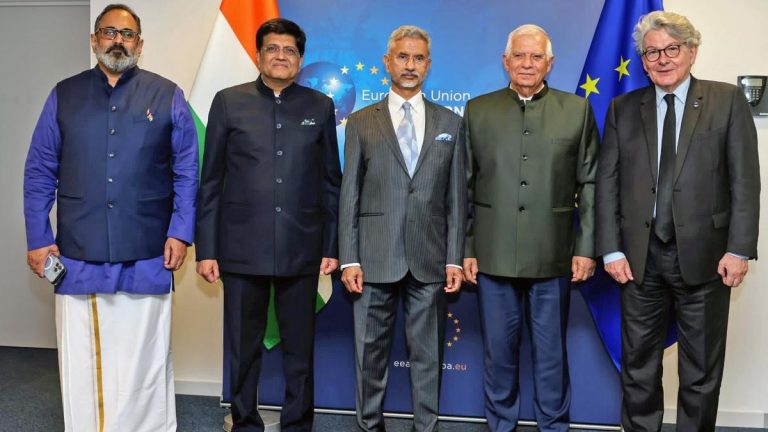
Days after saying that the European Union needed to limit the import of refined petroleum products from India, Josep Borrell, the top foreign affairs and security official for the European Union, suggested that EU entities buying refined goods from India were mainly to blame for the infiltration of Russian oil-based goods into the European Union.

Mr. Borrell’s Friday afternoon blog piece, “Some Clarifications on the Circumvention of EU Sanctions Against Russia,” has as its headline However, the diplomat observed a remarkable increase in the volume of oil India was acquiring from Russia before that nation invaded Ukraine.

The EU does not want to buy Russia’s energy exports because we do not want to assist its conflict with Ukraine. Additionally, Mr. Borrell stated in his letter, “We don’t want to offer Russia the components and technology products it needs for its war machine. He was very clear that even though the sanctions were not extraterritorial, other nations could not be “forced” to follow them because they solely related to transactions between EU firms and Russia.

The ambassador asserted that China had increased its purchases of Russian oil after the $60 per barrel cap on oil prices set by the “Group of Seven (G-7)” major nations went into force in December 2023.

In an interview with the Financial Times earlier this week, Mr. Borrell made the claim that it was “normal” for India to take advantage of the opportunity to buy less expensive oil below the price cap. Mr. Borrell reiterated this claim. But he also brought up another issue: refined petroleum goods from India, which are currently offered in Europe, were once made with Russian oil.

According to the data once more, he said, India’s export of refined goods like jet fuel or diesel to the EU climbed from 1 point (1 million barrels) in January 2022 to 7 points (4 million barrels) in April 2023.

The minister of external affairs, S. Jaishankar, and Mr. Borrell had private talks on Tuesday in Brussels. Russian oil is no longer regarded as Russian, according to European Council regulations, if it is “substantially transformed” in a third nation, Mr. Jaishankar indicated to a reporter during a briefing on Tuesday night.