Elon Musk says Tesla will construct a “new battery factory” in Shanghai

0

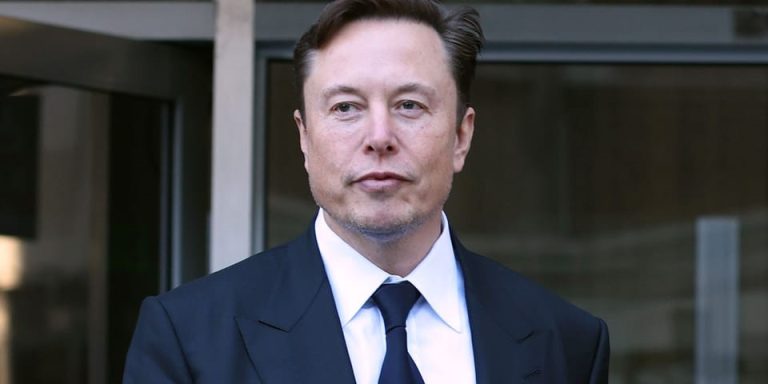
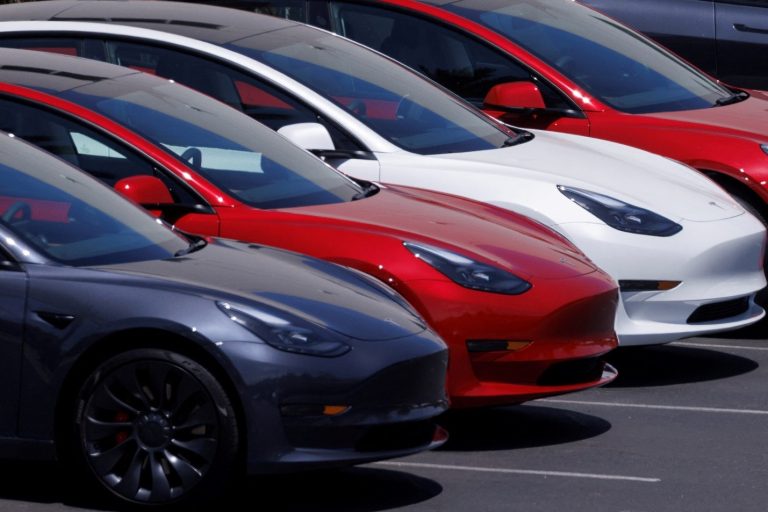
Elon Musk’s electric vehicle manufacturer, Tesla, claims to be growing in China as it constructs a new factory to produce its large-scale batteries.

The company claims that the Shanghai plant will be able to generate 10,000 of its “Megapack” energy storage units annually.

Megapacks, a massive battery that can be used to stabilise electricity grids and avert blackouts, are available. 10,000 of the units are produced annually at Tesla’s existing Megapack facility in California. The new Chinese plant will complement Tesla’s US manufacturing, according to Mr. Musk’s tweet.

According to Xinhua, a Chinese state-run media site, construction on the new Megapack plant in China is anticipated to start later this year, with battery production beginning by the summer of 2024.

Tesla will be able to increase output and reduce prices by utilising China, which is the world’s largest producer of batteries. The statement came at a time when the US government has been pressuring American businesses to depend less on China due to escalating hostilities between Beijing and Washington.

The Biden administration barred US technology companies last year from constructing “advanced technology” facilities in China for a period of ten years. These companies get federal assistance.

A $50 billion (£40 billion) strategy to expand the US semiconductor industry included the criteria. A statute dedicating $280 billion to high-tech manufacturing and scientific research was signed by Mr. Biden in August, amid worries that China was gaining ground on the US in terms of technology.

2019 saw the opening of Tesla’s first manufacturing facility outside the US, in Shanghai. Currently, 22,000 automobiles per week are produced at the facility.

Tesla has also made announcements about plans for a new overseas plant in Monterrey, Mexico, which is close to Berlin, Germany.

The world’s largest auto market, China, has experienced a dramatic decline in vehicle sales this year as the country’s economy weakens.

Due to a backlog of unsold cars and fierce competition in the market, Tesla this month lowered the cost of models produced at its Shanghai site.

Regardless of China’s threat, the president of Taiwan meets with the US Speaker, Kevin McCarthy

0

On April 5, United States House Speaker Kevin McCarthy will have a highly symbolic meeting in California with the president of Taiwan. This discussion has already provoked China’s ire and prompted dire warnings from Beijing.

After a two-nation journey to Latin America to see Taiwan’s few surviving formal friends, President Tsai Ing-wen will meet with the group outside of Los Angeles during what is officially a stopover.

After Ms. Tsai’s Central American visit, a pro-China protest with the slogan “One China” also gathered close when she arrived Tuesday evening.

In response to Taipei’s diplomatic contacts with foreign nations, Beijing asserts Taiwan as its own territory and objects. Last week, it informed Mr. McCarthy, a Republican and the second in line to the presidency of the United States, that he was “playing with fire” by seeing Ms. Tsai.

Taiwan has had decades of self-government and is a thriving democracy. It possesses a self-sufficient military, an independent judiciary, and all the other amenities of a modern state. Yet, very few nations recognise it as a sovereign state.

Under Ms. Tsai’s leadership, Taipei has gained backing from both parties in the US Congress and has gotten closer to Washington.

The most senior American politician to visit the island in more than two decades, Nancy Pelosi, who was Mr. McCarthy’s predecessor, incited outrage in Beijing last year. Instead of going himself as initially intended, Mr. McCarthy decided to meet Tsai at the “Ronald Reagan Presidential Library in Simi Valley, California.” While more than a dozen other elected officials were expected to participate, his staff claimed that the discussion would be “bipartisan.”

It was believed that choosing to hold the meeting in the US was a compromise that would demonstrate support for Taiwan while preventing an escalation of hostilities with China.

Ms. Tsai’s journey to southern California follows travels to Guatemala and Belize, as well as a quick stop in New York last week, where she was welcomed by Taiwanese expats waving flags.

China has recently been quite vocal about the visit, and “the managing director of the Indo-Pacific Programme at the German Marshall Fund,” Bonnie Glaser, suggested that Beijing may feel pressured to keep up the rhetoric.

The conference in California, according to the Chinese consulate in Los Angeles, will “immensely offend the national sensibilities of 1.4 billion Chinese people” and jeopardise “the political foundation of China-U.S. relations.”

“Johnson & Johnson” offers $9 billion to resolve talc claims

0

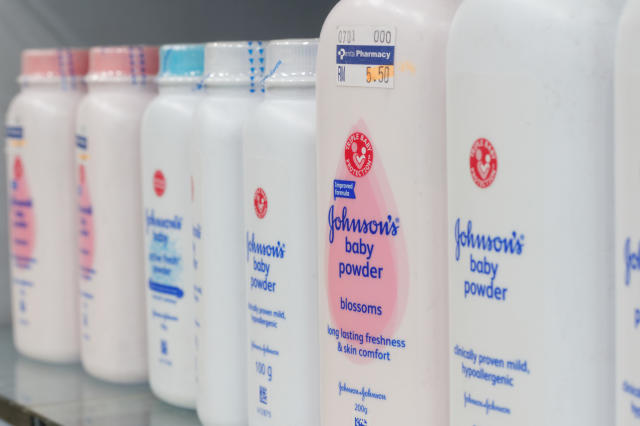
“Johnson & Johnson” has proposed to pay about “$9 billion” to resolve the thousands of lawsuits it is dealing with in North America that claim its “baby powder and other talc-based products” seed cancer.

While stating that it continued to view the claims as “specious,” the healthcare behemoth expressed hope that the fresh settlement offer would help bring an end to its legal dispute.

The amount is a significant increase from the earlier suggested number of “$2 billion.”

According to it, many parties involved in the case have expressed strong support for the revised offer.

‘More than 40,000 lawsuits’ have been charged against the company by former clients who claim that using its “talc-based baby powder” caused cancer. Some of the cases also claim that the product contained “asbestos,” which is known to cause cancer.

In 2020, the company discontinued selling its “talc-based baby powder” in the United States, blaming “misinformation” for reducing demand for the item, which was used to reduce diaper rash and for other cosmetic purposes, such as dry shampoo. It had plans to halt sales worldwide last year.

The baby powder had been sold by the corporation for about “130 years” prior to that choice. It still offers a product with corn flour in it for sale.

After designating a subsidiary to handle the claims, the business has been attempting to settle the litigation in bankruptcy court since 2021.

However, the subsidiary was not in financial disadvantage, and as a result, it was unable to use the bankruptcy system to settle the lawsuits, according to a previous bankruptcy court ruling. As a result, the subsidiary’s efforts were unsuccessful.

According to Erik Haas, global vice president of litigation for “Johnson & Johnson,” the company keeps believing that these assertions are speculative and without scientific basis.

Nevertheless, he claimed that “resolving these issues through the tort system would take decades and entail substantial costs on LTL and the system, with the majority of victims never obtaining any remuneration.”

“Resolving this issue through the recommended restructuring plan is both more equitable and more effective, enables claimants to get compensation in a timely manner, and enables the company to continue focusing on our objective to profoundly and positively affect health for humanity.”

In most of the talc legal action it faced, “Johnson & Johnson” claimed victory. Yet, it has been charge with a number of notable setbacks, such as a judgement in which 22 women were given awards totaling “more than $2 billion.”

According to “Johnson & Johnson,” almost “60,000 current claimants” have agreed to endorse the new settlement conditions.

Tesla: Car maker ordered to compensate an ex-employee $3.2 million due to charges of racism

0

Electric vehicle manufacturer Tesla was obliged to compensate a black former employee of $3.2 million (£2.6 million) against a lawsuit alleging racial harassment.

A federal jury decided that the Fremont factory’s workplace for lift operator Owen Diaz in 2015 and 2016 was racially hostile.

The $137 million that he was initially granted in 2021 has been reduced by 98%, though. The initial sum was deemed excessive by a judge last year.

Mr. Diaz received $175,000 in emotional distress damages and $3 million in punitive penalties on Monday.

Elon Musk, the CEO of Tesla, wrote on Twitter that if fresh information had been permitted to be presented, “the verdict would’ve been zero imo.”

African-American employees at the company’s Fremont, California, facility, according to Mr. Diaz’s original lawsuit, “experienced a scenario straight from the Jim Crow era.” He asserted that racist comments and restroom graffiti were commonplace for black workers in the workplace.

Employees would use racist historical titles, like “the plantation,” to describe places where black or African-American staff members worked, according to the lawsuit. It claimed that one employee experienced racial epithets “as frequently as 50–100 times each day.”

A federal court in San Francisco determined in 2021 that, despite criticism from supervisors, Tesla failed to take appropriate action to stop the abuse.

A damages verdict of $137 million was given to Mr. Diaz. At the time, Tesla contested the decision but acknowledged it was “not flawless.”

In April 2022, a US federal judge reduced Mr. Diaz’s award to $15 million and deemed the jury’s verdict to be “very exorbitant.” Last Monday, Mr. Diaz’s attorney, Bernard Alexander, stated the following: “The worldview of Mr. Diaz has been irrevocably altered.” “When someone’s safety is taken away, that is what happens.”

Jurors were urged by Mr. Alexander to grant his client roughly $160 million in damages.

The defence team for Mr. Diaz, according to Tesla’s attorney, Mr. Spiro, failed to demonstrate that Tesla had actually done any significant, long-lasting harm. As if this were some sort of game show, Mr. Spiro observed, “They’re just tossing numbers up on the screen.”

Why Hollywood celebrities prefer “stadiums over arenas”

0

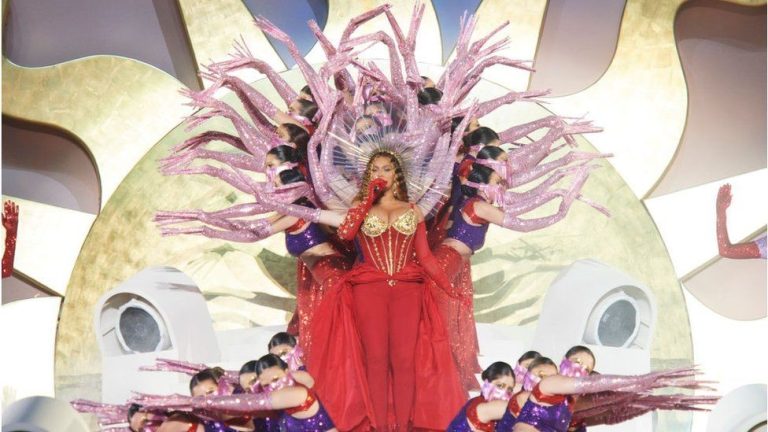
Wembley, the largest stadium in the UK, had just as many concerts as football games in 2022. With 1.3 million tickets sold, there were 16 sold-out performances by artists like Coldplay and Ed Sheeran.

Tottenham Hotspur has exceeded its permit by adding an additional tour date at its stadium since the demand for Beyoncé’s 2023 tour is so high.

To make sure the event can go on, they must now file a planning request with Haringey Council. Stadium tours, which were first popularised by the Beatles in 1965, were formerly the domain of the biggest names in pop music, such as Michael Jackson, Madonna, and Eminem; however, in recent years, stadium tours have begun to overtake them as the most popular option for major tours in the UK.

“Why do musicians pick us?” “It’s a scalability issue,” says Sunderland AFC’s Steve Davidson, chief operating officer.

He continues, “The cost of putting on these massive international tours is immense, so they [artists] have to sell out bigger stadiums to make it pay.”

According to Mr. Davidson, the Stadium of Light has a capacity of 60,000 for a normal event, which has drawn performers like Beyoncé and Pink to the northeast of England this summer.

Beyoncé’s Renaissance World Tour stage, minus its runway and second smaller stage, is expected to be 174 feet broad and 84 feet long, according to internet predictions made by her followers.

Compare this to her previous arena tour in 2013, where the main stage was just slightly larger than the stadium-sized one she had anticipated—76 feet by 49 feet.

Since the stage would be excessively large, an arena would not have the space to accommodate all those trucks.

They have to move from one location to another rapidly, and Steve explains that this saves them money.

Liam Boylan, director of Wembley Stadium, argues that larger tours also carry more risks.

Live event planning and ticket sales are the responsibility of promoters. A particular artist’s popularity must be evaluated to determine if there will be enough people in the audience to fill the seats.

“Promoters will claim, “I’m going to guarantee you so much money,” but if a show doesn’t work, they’re responsible,” says Mr. Boylan.

End of an Era: E3 Annual Video Game Showcase Cancelled as Industry Shifts to Digital

0

The cancellation of this year’s E3 event marks a significant shift in the video game industry. For over two decades, E3 has been a vital platform for developers, publishers, media, and fans to gather in one place and showcase the latest and greatest in gaming. However, with the rise of online streaming and individual company events, E3 has struggled to remain relevant.

The decision to cancel the event was not taken lightly, according to Kyle Marsden-Kish, ReedPop’s global vice president of gaming. He stated that it was “a difficult decision” but that they had to do what was “right for the industry.” The ESA and ReedPop, E3’s organisers, have announced that they will re-evaluate the future of the event.

The cancellation follows a string of high-profile publishers pulling out of the event. Ubisoft, the latest company to announce its absence, will instead be hosting its own live-streamed showcase. Nintendo, Microsoft, and Sony were reportedly set to miss the event as well.

E3’s decline can be attributed to its inability to adapt to industry changes, such as the growth of mobile gaming and the rise of digital-only showcases. With more frequent and accessible events, companies have the opportunity to reach audiences without the need for a large in-person gathering.

At its peak, E3 was a spectacle that assaulted the senses, with neon lights, actors dressed as video game characters, and blaring music. It was an exciting atmosphere that created a buzz and gave the industry a week in the spotlight. However, individual company events lack the same impact as they often speak to people who are already converted to their products.

The loss of E3 this year will be felt by the industry, as it provided an opportunity to cut through to new audiences and different people. It also brought the global games industry together, providing a platform for smaller developers to gain exposure. The long-term impact of the cancellation is unclear, but the industry may suffer without this week in the spotlight.

Overall, the cancellation of E3 reflects a shift in the video game industry towards more accessible and frequent events. While E3 may return in the future, it will need to adapt to industry changes to remain relevant. The loss of this year’s event marks the end of an era, and the future of E3 remains uncertain.

Twitter announced its new and updated “pricing of API”

0

Twitter’s API access tiers are now available after several weeks of waiting. Last month, the business made its first announcement regarding changes to its API, stating that it will no longer allow free access to the Twitter API. Yet, the previously disclosed price structures also include a fundamental free tier for content-posting bots.

Overall, there are three tiers: “the constrained Free tier,” “the laxer $100 Basic tier,” and the “pricey Enterprise tier.” According to the business, “authorized Twitter API programmers, including developers on the new Free tier, would still have access to the Advertising API at no extra cost.”

In addition, Twitter asked developers to switch to the new tiers very shortly for a peaceful transition as the existing access levels, including “Standard (v1.1), Essential (v2), Elevated (v2), and Premium,” will be discontinued over the next 30 days.

Remember that when Twitter first announced changes to the API back in February, it said that free API access will end soon. Many of Twitter’s beloved “content-posting bots” may vanish as the API changes take effect, warns the notification.

Perhaps in response to the strong criticism, Mr. Elon Musk changed his position and said that “the company would still provide a free tier to bots who produce great content. On February 13, Twitter stated that the launch has been delayed by a few more days.”

The recent actions taken by Twitter haven’t exactly been favourable to developers. The company abandoned many developer projects last year, including Twitter Toolbox and Twitter Tiles. The company then stopped supporting all third-party client apps in January. The new API restrictions may turn off developers even more.

Experts like Elon Musk are demanding a halt to AI training

0

In light of concerns that humanity may be in danger, leading players in artificial intelligence seek to halt the development of strong AI systems. They claim the race to develop AI systems is out of control in an open letter they have signed, which warns of potential consequences.

Elon Musk, the CEO of Twitter, is one of those calling for a minimum of six months to pass before continuing to train AIs above a particular threshold.

The developer of ChatGPT, OpenAI, just made available GPT-4, a cutting-edge technology that has stunned observers with its aptitude for tasks like identifying objects in pictures.

The letter, from the Future of Life Institute and signed by the luminaries, asks that progress be temporarily halted at that stage and warns of the potential dangers that future, more complex systems may present.

According to it, society and humanity are at grave risk from AI systems with human-competitive intellect.

“Its purpose is to direct transformational technologies away from extreme, large-scale hazards and towards benefitting life,” according to the Future of Life Institute, a non-profit organisation.

The organisation lists Mr. Musk as an external adviser. He is the owner of Twitter and the CEO of the automaker Tesla. The letter claims that while carefully developing advanced AIs is necessary, “recent months have seen AI labs embroiled in an out-of-control rush to develop and deploy ever more powerful digital minds that no one—not even their creators—can understand, anticipate, or safely control.”

The letter issues a warning that automation and erroneous information could clog up information conduits and displace jobs. The letter comes in the wake of an analysis by the investment bank Goldman Sachs that suggested that while AI was expected to improve productivity, millions of jobs might be automated.

But, according to other experts, it is exceedingly difficult to anticipate how AI will affect the labour market.

The Bank of England reported that it is on high alert after the banking turmoil

0

According to the governor of the Bank of England, the bank is on “intensified” alert in case the banking industry experiences more unrest.

Andrew Bailey assured Parliament that the UK financial system was not under stress as a result of the current issues facing lenders.

Since the failure of Silicon Valley Bank and Signature Bank, which raised doubts about the stability of other lenders, officials have made an effort to soothe investors.

Concerns over the stability of the powerful Swiss banking behemoth Credit Suisse in Europe prompted a hasty takeover by competitor UBS. Sharp drops in banking shares across the globe have been caused by market jitters.

The Bank of England would “continue being attentive,” according to Mr. Bailey’s statement to Treasury Committee members.

Since the 2008 financial crisis, the collapse of Silicon Valley Bank (SVB) has been the largest US banking failure, and depositors have had difficulty withdrawing their funds.

Recent increases in interest rates, which had a negative impact on the value of SVB’s assets, were a factor in the collapse.

While HSBC saved the lender’s UK subsidiary, American regulators had to intervene to protect clients.

The incident has sparked a contentious discussion in the US about whether SVB was properly supervised and if authorities handled its collapse appropriately.

The failure was termed “a textbook case of mismanagement” by financial regulators at a proceeding in Washington on Tuesday. They blamed SVB leaders for failing to change their methods as interest rates rose last year, despite official cautions.

Senators, however, questioned them, claiming that the incident had also shown oversight flaws.

Senator Jon Tester, a Democrat from Montana, said that it appeared that authorities were aware of the issue but did nothing to address it.

The pace of the SVB’s collapse caught UK banking regulators off guard, as they revealed to lawmakers, and may indicate that banking regulations need to be updated.

The global financial crisis of 2008, when banks ceased lending to one another and the globe entered a serious recession, Mr. Bailey told Parliament, did not, in his opinion, apply to the UK.

The SVB scandal, according to Michael Gruenberg, the head of the Federal Deposit Insurance Corp. in the US, “demonstrated the higher risk of bank runs at a time when currency may flow out of organisations with remarkable speed in response to news reinforced by social media channels.”

He and other US regulators voiced support for tightening banking regulations, reforms that certain Democrats like Elizabeth Warren have pushed for. Republican opposition to tougher regulation, though, makes it less likely to take place.

The government scrapped plans for a token made by the Royal Mint.

0

The Treasury has revealed that plans for a government-backed Royal Mint “non-fungible token (NFT)” have been abandoned.

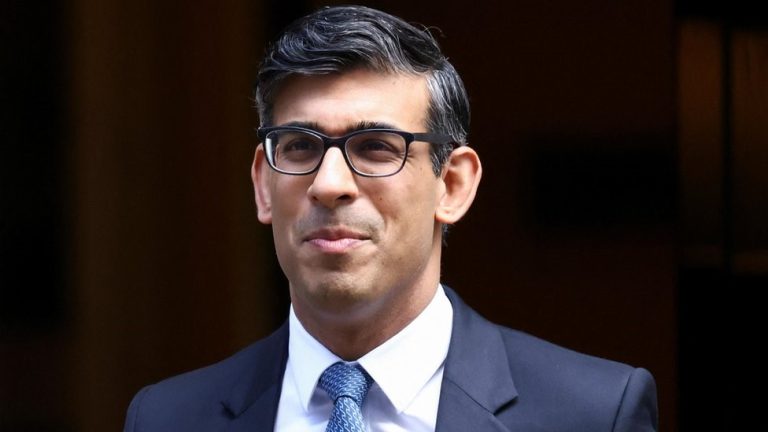
In April 2022, while serving as chancellor, Rishi Sunak directed the creation of a “NFT for Britain” that could be traded online. NFT’s are investments in the digital world that can be purchased and sold but do not actually exist in physical form.

Following discussions with the Royal Mint, the Treasury declared it would not proceed with the launch. However, Economic Secretary Andrew Griffiths stated that the department would continue to “examine” the plan.

NFTs have been promoted as the digital equivalent of collectables, but some doubters worry that they could be a bubble that will burst soon. Some of them have been sold for millions of dollars after being exploited as speculative investments.

The Treasury Select Committee’s head, Harriet Baldwin, responded to the news by saying, “We have not yet seen a substantial amount of proof that our constituents should be investing in these risky tokens unless they are willing to lose all of their money. “Therefore, it’s possible that’s the reason the Royal Mint and Treasury decided to take this action together.

NFTs are distinct digital data units that employ the same “blockchain” technology as cryptocurrencies like Bitcoin. The blockchain ledger is updated by thousands of computers all over the world, making it impossible to forge the records.

The digital tokens, which first appeared in 2014, can be thought of as proofs of ownership for digital or physical assets and are exchangeable for fiat money or cryptocurrencies.

The Treasury is attempting to regulate some cryptocurrencies and had intended to enter the NFT sector as part of a larger effort to establish the UK as a centre for digital payment businesses.

UK Prime Minister Mr. Sunak stated in April 2022, “By effectively regulating, we can give them the security they need to consider and invest long-term.” “We want to see the cryptocurrency firms of the future—and the jobs they produce, here in the UK.”

Among the best-known NFTs are those in the “Bored Ape Yacht Club” series, which provide ownership of a special illustration of a cartoon ape to the bearer. With the bankruptcy of cryptocurrency exchange FTX last year, NFT prices fell precipitously.